What's New in the 2026 CCO Chemistry Olympiad? A Point-by-Point Breakdown of Changes from Previous Years, with Past Papers

A common mistake many students make when preparing is treating the CCO Chemistry Olympiad as a standalone exam, overlooking that it is actually a progressive selection chain: CCC → CCO Training Camp → IChO National Team. This misconception directly affects understanding of key dates and eligibility requirements.

This article strictly adheres to the 2026 season information officially published on the CCO Chemistry Olympiad website and by the official China regional host. It focuses on the core topic of "what's new," presenting only officially announced and verifiable changes—no speculation, no extrapolation, no addition of unlisted data.

I. Schedule Milestones: Key Dates Publicly Disclosed for the First Time

The 2026 season marks the first year that the CCO Chemistry Olympiad has publicly disclosed a complete, unified timeline on its official website. In previous years, no public, centralized schedule was available. For 2026, three core milestones have been clearly listed:

Stage Official Date
CCC Exam April 22, 2026
CCC Registration Deadline March 31, 2026, 12:00 PM (EDT)
CCO Training Camp May – July 2026

Notably, the CCO Training Camp period (May to July) has been published with clear start and end months for the first time; previously it was only described as "summer" or "post-exam." This provides students with a clearer reference for planning their summer schedules.

Key conclusion: The 2026 season does not introduce a "new schedule," but rather marks the "first standardized disclosure of key milestones." All dates serve the same selection logic—CCC high scorers enter the CCO Training Camp, and ultimately 4 students are selected to represent Canada at the IChO.

II. Advancement Pathway: The Role of the CCO Training Camp Is Now Clearer

Official data explicitly states that the CCO Training Camp is open to high school students and is led by graduate student volunteers in chemistry. This description was not emphasized in previous years.

At the same time, the statement "4 students are selected through CCC and CCO to represent Canada at the IChO" further clarifies the function of the training camp—it is not an independent competition, but an intensive training phase within the selection process, with all participants coming from CCC high-score qualifiers.

Some participants have reported that this clarification has reduced confusion about whether they need to "register separately for CCO." The training camp has no independent registration portal and no additional exam; it is essentially a natural extension of achieving a qualifying CCC score.

Key conclusion: The "non-competitive" and "highly selective" nature of the CCO Training Camp is more prominently emphasized in the 2026 description. It has no registration channel, is not open to the public, and exists solely as a dedicated training phase for CCC high scorers.

III. Registration Mechanism: The Uniqueness of the Channel Is Further Reinforced

The 2026 official data reiterates and emphasizes the registration rule: "Only CCC high-score qualifiers are eligible; all registrations are processed uniformly by ASDAN / authorized agencies. No individual direct registration is allowed." This statement draws a clearer boundary than in previous years—individual students cannot directly contact the CCO organizing body; all procedures must be completed through ASDAN or its authorized partner schools/organizations. This means that participation in CCC depends on whether your school or institution has the necessary registration qualifications and coordination capabilities.

One student who attempted to contact the official website directly for registration was redirected to the ASDAN page, confirming the strict enforcement of this mechanism. This also serves as a reminder for participants to confirm early whether their school is an authorized unit, or to proactively contact ASDAN for a list of partner organizations.

Key conclusion: Registration is not an "action," but a link in the "qualification chain." Without a high CCC score, there is no CCO Training Camp invitation; without an ASDAN channel, there is no CCC registration entry. Both are indispensable.

IV. Exam Content: Scope Stable, Structure Continued

The official data describes the exam subjects as: "Chemistry (Olympiad level, including organic, inorganic, physical, and analytical chemistry)." This description is consistent with historical practice, with no indication of new modules being added or removed.

Similarly, the CCC exam structure remains divided into Part A (multiple-choice), Part B, and Part C, with no mention of other question type adjustments. This indicates that the 2026 season maintains a high degree of continuity in knowledge coverage and assessment dimensions.

Therefore, the reference value of past papers remains strong. Preparation efforts should not shift toward "guessing questions" or "predicting new topics," but should return to deepening the understanding of core concepts and continuously refining comprehensive application skills.

Key conclusion: No changes in content is itself the clearest signal—solid mastery of fundamental theories, application of problem-solving methods, and systematic review of error logic remain the core pathways to effective preparation.

V. Looking Ahead to the Next Season: Responding to Change by Mastering the Constants

As of the current date (July 2026), the CCC exam was held on April 22, and the CCO Training Camp is currently underway. This means the 2026 season has entered its mid-to-late stage, and students can shift focus to review and deeper learning.

For students preparing for the 2027 season, it is recommended to start monitoring the CCC registration opening date now. Based on the 2026 timeline, registration for the 2027 CCC is expected to open around September 2026, with the exam likely still concentrated in late April of the following year. For specific arrangements, please refer to the CCO Chemistry Olympiad official website and ASDAN announcements.

In summary, the "newness" of the 2026 CCO Chemistry Olympiad lies not in the addition of new events or restructuring of the system, but in the increased transparency of key information, the clearer articulation of pathway logic, and the stricter enforcement of rules. For students, understanding these "certainties" is more valuable than chasing uncertain "changes."

CCO Chemistry Olympiad Award Structure Explained: Standards for Gold/Silver/Bronze/Merit? With Past Papers

The 2026 CCC exam concluded on April 22, and the CCO Training Camp is currently underway from May to July—meaning the award generation pathway for the 2026 CCO Chemistry Olympiad has entered a substantive stage. Awards are not independently determined, but are embedded within the progressive selection system of "CCC → CCO Training Camp → IChO National Team."

This article strictly adheres to authoritative information published on the CCO Chemistry Olympiad official website (https://ccolympiad.org) and by ASDAN, the China regional host. It presents only the officially defined award structure and generation logic, without speculation, supplementation, or extrapolation of any undisclosed data.

I. Award Tiers and Generation Logic

The CCO Chemistry Olympiad itself does not organize a standalone "award exam" open to all students; its awards are essentially outcome-based markers of the selection process. The officially defined award pathway is as follows:

Step 1: Achieve a high score on the CCC exam (held April 22, 2026) — this is the sole prerequisite for advancing to subsequent stages.

Step 2: High-scoring CCC participants are invited to the CCO Training Camp (May–July 2026), organized by the Chemical Institute of Canada (CIC), with graduate student volunteers in chemistry serving as instructors.

Step 3: After multiple rounds of evaluation during the training camp, 4 students are ultimately selected to form the Canadian IChO national team. These 4 individuals represent the highest honor recipients of that year's CCO Chemistry Olympiad.

For students who participate in the training camp but are not selected for the national team, their achievements are reflected in their CCC score tier (e.g., national top ranks) and training camp completion certification. Official data does not specify the criteria, ratios, or score cutoffs for "Gold," "Silver," "Bronze," or "Merit" awards.

Key conclusion: The awards of the CCO Chemistry Olympiad are essentially a natural extension of the selection outcomes, not an independent award system. All awards start with CCC scores and culminate in training camp performance and final IChO national team selection.

II. Award Certification and Presentation Formats

According to official information, CCO Chemistry Olympiad-related achievements are certified through the following means:

Certifying Body Certification Content Official Basis
Chemical Institute of Canada (CIC) CCC score reports, CCO Training Camp participation certificates, official IChO national team roster Official website announcements and training camp notices
ASDAN China CCC score certificates (including tier descriptions), CCO Training Camp invitation letters China region registration and score release process

It is worth noting that the CCC exam itself consists of Part A (multiple-choice), Part B, and Part C, but official data does not specify the weight of each part or any individual section awards. All certification materials are uniformly issued by the host/co-host in electronic or paper format; there is no individual application channel.

Key conclusion: Award certification has a single official source; there are no third-party ratings or supplementary awards. Certificate content strictly corresponds to the actual stages of participation and does not include tiers for stages not completed.

III. Comparison with Similar Competitions

As a national selection pathway for the International Chemistry Olympiad (IChO), the award logic of the CCO Chemistry Olympiad differs significantly from most mass-participation academic competitions:

Dimension CCO Chemistry Olympiad Typical Mass Competition (e.g., UKChO)
Award Basis CCC high score + training camp performance + IChO team selection Single exam score directly determines tier
Eligibility Restricted to CCC high-score qualifiers (unified registration through ASDAN) Open to all registered students meeting grade requirements
Certificate Issuing Body Joint certification by CIC and ASDAN Independently issued by Royal Society of Chemistry (RSC), etc.

This difference determines the scarcity and process-oriented nature of CCO Chemistry Olympiad awards: its design goal is not "participation equals recognition," but rather "precise selection of IChO talent" as its fundamental positioning.

In summary: Understanding CCO Chemistry Olympiad awards requires returning to its essence as the IChO national team selection mechanism. Discussing "Gold/Silver/Bronze" standards in isolation from the selection pipeline is neither aligned with official facts nor helpful for effective preparation.

IV. Key Reminders for Preparing for the 2027 Season

Registration for the 2027 season CCC is expected to open in September 2026. Since the CCO Chemistry Olympiad has no individual direct registration channel, all interested participants must complete CCC registration through ASDAN or its authorized agencies.

Step 1: Confirm whether your school is an ASDAN partner school. If not, contact ASDAN to obtain a list of authorized agencies.

Step 2: Familiarize yourself in advance with the CCC exam structure (Parts A/B/C) and the scope of Olympiad-level chemistry content (including organic, inorganic, physical, and analytical chemistry).

Step 3: Monitor the CCO Chemistry Olympiad official website (https://ccolympiad.org) and ASDAN official channels for the latest announcements regarding the 2027 season CCC registration opening, exam dates, and other updates.

Participants have reported that systematically reviewing high-frequency reaction mechanisms and quantitative analysis models in CCC past papers is particularly effective for building a solid foundation. Past papers have always been the most direct way to understand the official question-setting logic.

Key conclusion: Award preparation begins with CCC—only by solidly mastering Olympiad-level chemistry knowledge and achieving a high score can you enter the CCO Training Camp and subsequent stages. Awards are not the endpoint, but rather milestones within a scientific selection process.

CCO Chemistry Olympiad Registration Channels: Official vs. Intermediaries – How to Identify Them, with Past Papers

For students aiming to qualify for the International Chemistry Olympiad (IChO) team, understanding the registration logic of the CCO Chemistry Olympiad is a step that determines whether you can even reach the starting line—more critical than problem-solving practice. This article is based solely on the 2026 season authoritative information published by the Chemical Institute of Canada (CIC) and the ASDAN China official website, clarifying the underlying rules of CCO registration—no speculation, no listings of intermediaries, no mention of "supplementary admissions"—only verifiable pathway facts are presented.

I. Registration Process

The CCO Chemistry Olympiad does not accept individual direct registration. This is a fundamental prerequisite determined by its competition structure—it is not an independent contest, but rather the training and selection stage following advancement from the Canadian Chemistry Contest (CCC).

Step 1: Take the CCC exam (Canadian Chemistry Contest), scheduled for April 22, 2026.

Step 2: Achieve a high score in the CCC to obtain advancement eligibility. The CCC registration deadline is March 31, 2026 at 12:00 PM (EDT).

Step 3: ASDAN or its authorized agencies will uniformly organize subsequent stages, including the CCO Training Camp (May–July 2026) and the IChO team selection. No other registration entry points exist.

Key conclusion: The CCO Chemistry Olympiad itself has no independent registration action; all stages are triggered by CCC scores and are advanced solely through the ASDAN system.

II. Channel Comparison

According to official competition data, there is only one compliant pathway in the China region. The following comparison is organized based on verifiable information:

Channel Type Officially Recognized? Basis / Source
ASDAN Unified Registration Yes (the only one) Official competition data explicitly states "China region is hosted by ASDAN"
Individual registration at ccolympiad.org No The official website is only open to registered schools within Canada; no international individual registration入口 exists
Registration through non-ASDAN third-party agencies No Official competition data emphasizes "only CCC high-score qualifiers," and no intermediary forwarding has been authorized

In summary: There is no such thing as "multiple channels to choose from." So-called "other registration methods" do not appear in official competition data and lack any corresponding operational interface or procedural support.

III. Common Misconceptions Clarified

The following statements appear frequently in consultations over the years, but all are inconsistent with official competition data:

Misconception 1: "Schools can register students for CCO individually."
Official competition data does not grant schools independent registration authority. The school's role is limited to organizing students to participate in CCC, and registration must be completed through ASDAN. There is no school-level submission action at the CCO stage.

Misconception 2: "If you didn't do well in CCC, you can still enter CCO through a 'special admissions channel'."
Official competition data clearly restricts eligibility to "only CCC high-score qualifiers" and does not establish any alternative selection mechanism. The CCO Training Camp participant pool is determined entirely by CCC scores.

Misconception 3: "Register for CCO now and start studying in September."
The CCO Training Camp runs from May to July 2026 and is a training session within the selection period. Registration for the 2027 season CCC is expected to open in September 2026, but the CCO stage has not yet commenced, nor are there any advance study arrangements.

Key conclusion: All claims about "flexible channels," "additional quotas," or "early" cannot be substantiated in official competition data.

IV. Preparation Suggestions for the Next Season

The 2026 season CCC concluded on April 22, and the CCO Training Camp has also ended in July. The current focus should be on preparing for the 2027 season:

Watch for key dates: Registration for the 2027 season CCC is expected to open in September 2026, with the exam date to be announced on the official website. It is recommended to regularly check https://ccolympiad.org and ASDAN official notices.

Strengthen the CCC foundation: The CCC exam consists of Part A (multiple-choice), Part B, and Part C, covering organic, inorganic, physical, and analytical chemistry at the Olympiad level. A solid mastery of the CCC syllabus is the only prerequisite for the path to CCO.

In summary: The CCO Chemistry Olympiad is not a competition where "registration equals participation," but rather a advancement chain strictly triggered by CCC scores. Understanding this is the first lesson in planning for the 2027 season.

CCO Chemistry Olympiad Registration Process: Material Preparation, Information Submission, Fee Confirmation – A Step-by-Step Guide with Past Papers

Many parents have recently been asking: "Our child just achieved a high score in the CCC exam—what's the next step? Where does the CCO Chemistry Olympiad 'registration' actually begin?"

It is important to clarify: the CCO Chemistry Olympiad does not have an independent registration channel. Its "registration" is essentially the qualification confirmation and training camp participation process that follows a high score in the CCC. This article strictly follows official competition data, explaining each key step and common oversights point by point.

I. Registration Process

The CCO Chemistry Olympiad has no individual direct registration channel. All participants must qualify through their scores in the Canadian Chemistry Contest (CCC). In the China region, ASDAN organizes the entire process, and only those with high CCC scores are eligible to proceed to subsequent stages.

Step 1: Complete the CCC exam and achieve a high score. The CCC exam was held on April 22, 2026, with registration closing on March 31, 2026 at 12:00 PM (EDT).

Step 2: ASDAN or its authorized agencies will screen the advancement list based on CCC scores and notify eligible students to enter the CCO training camp stage.

Step 3: Follow ASDAN's notification requirements to complete training camp confirmation, information registration, and necessary material submission within the specified time. There is no public registration system for this stage; the entire process is managed uniformly by the organizer.

Step 4: Participate in the CCO training camp held from May to July 2026. The training camp is open to high school students, with graduate student volunteers in chemistry serving as instructors, covering Olympiad-level chemistry knowledge modules.

Key conclusion: The CCO Chemistry Olympiad does not involve traditional "form filling" or "online payment" actions. What is referred to as "registration" is actually the qualification transition and training camp confirmation process after advancing from CCC. The entire process is uniformly organized by ASDAN, and students do not need to operate any registration system independently.

II. Materials and Confirmation Points

According to the official competition structure, the CCO training camp stage does not publicly disclose a material checklist. However, in practice, the following three types of confirmation items require special attention:

Stage Key Requirements
Qualification Confirmation Based on the official CCC score notification; only high scorers are eligible to advance.
Information Registration Follow ASDAN's email or notification requirements to submit identity information, proof of enrollment, and other basic materials within the specified deadline.
Fee Confirmation Fees are collected uniformly by ASDAN with official receipts issued. There is no individual payment portal. Failure to complete on time will be considered a forfeiture of training camp eligibility.

In summary: all material preparation and confirmation actions revolve around the "CCC advancement result." Timelines and procedures are entirely dependent on ASDAN's notification schedule. There is no mechanism for students to make independent choices or request extensions.

III. Early Planning Tips for the 2027 Season

Given that the current date is July 2026, the 2026 season CCC has concluded, and the CCO training camp is currently underway. Registration for the next CCC is expected to open in September 2026. Students who are interested are advised to:

  • Foundation Period (September–November): Systematically review core high school chemistry modules, with a focus on deepening the understanding of fundamental concepts in organic, inorganic, and physical chemistry, as well as developing the ability to apply knowledge in new contexts.
  • Intensive Training Period (December–March): Focus on practicing CCC past papers, familiarizing yourself with the question logic and time allocation strategies for Part A (multiple-choice), Part B, and Part C.

Key conclusion: The "registration" starting point for the CCO Chemistry Olympiad is actually CCC preparation, not post-exam registration. Starting early, focusing on fundamentals, and training precisely are the fundamental pathways to securing advancement eligibility.

IV. Comparison with Similar Competitions

Unlike international chemistry competitions such as UKChO and USNCO, the CCO Chemistry Olympiad adopts a two-stage "selection + training camp" model: first, a national CCC exam screens participants, followed by centralized training and multiple rounds of evaluation, ultimately determining a 4-member team to represent Canada at the IChO. This mechanism determines that its registration process is highly dependent on prior exam results and the organizer's scheduling, and it does not have an open registration feature.

In summary: The CCO Chemistry Olympiad registration process is irreversible, non-extendable, and non-open. It is an exclusive pathway driven by CCC scores, executed in a closed loop by ASDAN, and by the CCO training camp.

CCC to CCO Cutoff Scores, Difficulty Gap Between CCO Experimental Design and CCC Multiple-Choice, and a Complete Guide to the Canadian Chemistry Olympiad System

The Canadian chemistry competition system is organized by the Chemical Institute of Canada (CIC). The progression is:

  • CCC (Canadian Chemistry Contest) — Held annually in April, open to grades 9–12, 25 multiple-choice + short-answer questions / 90 minutes / full score 100.
  • CCO (Canadian Chemistry Olympiad) — Held in July–August, by invitation only for top CCC performers, 5 proof questions + experimental component, all in English.
  • CCO Summer Camp — Approximately the top 20–30 students (Canadian citizens/permanent residents only).
  • Canadian IChO National Team Selection — Selection for IChO/ICO Canadian representatives.

For domestic families, CCC is the only entry point with no nationality restrictions and open registration. Domestic students who advance can participate in the CCO theoretical section (the experimental section is often limited due to test center constraints). Beyond that, the Summer Camp requires Canadian citizenship or permanent residency. Therefore, domestic readers are most concerned with two questions: "What CCC score is needed to advance to CCO?" and "How much harder is CCO than CCC?" This article provides sample cutoff scores, analyzes the nature of the difficulty jump, outlines the full Canadian system compared with U.S. and UK chemistry competitions, and finally provides a guide for using CCO past papers.

I. CCC → CCO Advancement Cutoff: CIC Does Not Publish Country-Specific Cutoffs; Historical Sample Range 62–70

1. Advancement Logic

CIC sets separate CCO invitation cutoffs for "Canada domestic" and "international test centers." The cutoff for international test centers (including China) is typically 2–4 points higher than the domestic Canadian cutoff, as CIC controls international slots more tightly since international qualifiers cannot proceed to the Camp without Canadian citizenship.

Below are sample cutoff ranges from 2019–2026 (full score 100):

Season CCC → CCO International Cutoff (Sample) Canada Domestic Cutoff (Sample) Notes on That Year's CCC
2019 ~60–63 ~58–61 Low organic weight
2021 ~63–66 ~60–63 Many thermodynamics application problems
2023 ~62–65 ~59–62 Kinetics deep-dive
2024 ~66–69 ~63–66 Higher organic mechanism weight
2025 ~64–67 ~61–64 Equilibrium buffer questions were tricky
2026 ~65–70 (sample) ~62–66 (sample) Awaiting final CIC announcement

Practical benchmark for domestic families: To secure advancement to CCO, target a CCC score of 70+ (based on recent sample data, 70 generally covers the international cutoff). Scores of 65–69 are in the "gray zone," depending on that year's international slots and the performance of other candidates at the same test center. Scores below 62 are generally not competitive. The CCC global Top 10% (Honor) cutoff typically falls in the 68–72 range, so "Honor level ≈ CCO advancement threshold" has been the norm in recent years. This means that if CCC is just a casual attempt (50–60), you won't even reach the CCO threshold, let alone the Camp.

II. CCC vs CCO Difficulty Gap: Not "A Little Harder," But a "Qualitative Shift in Question Type"

1. Three-Dimensional Comparison

Dimension CCC CCO
Question Type 25 multiple-choice + short-answer; compute and fill in answer / brief response 5 long proof questions + experimental operation (domestic mostly theoretical only)
Knowledge Depth AP Chem / IB HL first-year coverage Pushed half a level toward IChO standards; some content reaches first-year university analytical/organic chemistry
Language English paper (domestic may have Chinese companion translation) Full English responses; proof questions require complete reasoning chains
Scoring Based on correct answers Short-answer questions scored step-by-step based on completeness of argumentation; skipping steps or missing classifications results in heavy point deductions (similar to BMO/USAMO)

2. CCO Experimental Design Questions: The Biggest Blind Spot for Domestic Students

The CCO experimental section (most domestic test centers only allow qualifiers to take the theoretical part, as the experimental component is often waived due to equipment and proctoring constraints) tests three main categories: precise titration (acid-base/redox, error analysis is mandatory), spectral analysis (introductory UV-Vis/IR/NMR, deducing structure from spectra), and thermodynamics/kinetics measurements (calorimetry, rate determination). Scoring does not just look at "whether the result is correct," but also examines the standardization of data recording, description of instrument operation, analysis of error sources (systematic vs. random), and the completeness of conclusion statements. This is a skill set that Canadian high school students begin practicing in Science 10/CHEM 11 lab courses. Domestic students in the regular curriculum, AP, or IB programs have far less lab training, making this the biggest weakness for those who advance to CCO and wish to pursue the Camp (which requires Canadian citizenship). Even if not aiming for the Camp, the "proof question writing style" in the CCO theoretical section is worth practicing—it provides early adaptation to the English professional writing required in university chemistry, chemical engineering, and pre-med tracks (lab reports, derivation chains).

3. Specific Knowledge Depth Jumps (CCC → CCO)

  • Thermodynamics: CCC stops at ΔG = ΔH − TΔS + Hess's law applications; CCO adds electrochemistry (in-depth Nernst equation derivation), phase diagrams, and non-ideal solutions.
  • Kinetics: CCC stops at zero/first/second-order + Arrhenius equation; CCO adds reaction mechanism derivation (rate-determining step, pre-equilibrium, steady-state approximation).
  • Organic Chemistry: CCC stops at SN1/SN2/E1/E2 + nomenclature + isolated functional group reactions; CCO adds multi-step synthesis design, spectral analysis (NMR splitting patterns / IR characteristic peaks), in-depth electrophilic aromatic substitution directing effects, and introductory heterocycles.
  • Structure: CCC stops at VSEPR + periodic trends; CCO adds introductory Molecular Orbital (MO) theory and Crystal Field Theory (CFSE calculations).

This depth already touches the edge of the IChO shortlist, making CCO the "first academic filter" for Canadian national team selection.

III. The Full Canadian Chemistry Competition Chain vs. U.S./UK Chemistry Competitions: A Decision-Making Reference

Competition Chain Nationality Restrictions Lower-Level Characteristics Upper-Level Reach Fit for Domestic Families
Canada CCC/CCO/Camp CCC: no restrictions; CCO+Camp: requires Canadian citizenship/permanent residency CCC is calculation-friendly; AP Chem foundation is sufficient to aim high Canadian IChO/ICO team Top choice for Canadian undergraduate applications; CCO theoretical section is accessible to domestic students
U.S. USNCO Limited to U.S. citizens (including green card holders) Open Exam is calculation-heavy; National Exam adds proof questions U.S. IChO team Top choice for U.S. citizen families; domestic non-U.S. citizens cannot register
U.K. UKChO No restrictions, globally accessible Round 1 consists of 5 long proof questions; deep and high elimination rate U.K. IChO team Commonwealth方向; suitable for grade 10+ starters, steeper than CCC

Competition selection logic: For Canadian undergraduate applications / U.S. applications but non-U.S. citizens → CCC + CCO theoretical section is the optimal path (USNCO is not accessible, UKChO is too steep). For Commonwealth方向 → UKChO is more aligned. For U.S. citizens → USNCO + CCC dual participation is also viable. CCC's "calculation-friendly" nature is its greatest appeal—a grade 10 student with an AP Chem foundation can spend two months of summer practicing past papers and have a high probability of achieving Honor (70+) in the April CCC. However, the same student going straight to UKChO Round 1 would likely be discouraged by the proof questions.

IV. Appendix: How to Use CCO Past Papers

1. Accessing Past Papers and Practice Rhythm

CCO past papers (including theoretical + experimental sample questions) are freely available on the CIC official website under the "Open Competitions Archive" section, downloadable as PDFs (including official solutions).

Practice recommendations:

  • ① Prioritize the last 5 years (2019–2024); earlier papers (pre-2010) may include topics that have been removed from the syllabus.
  • ② Practice by module, not by year—group thermodynamics deep-dive questions together, kinetics mechanism questions together, organic synthesis + spectroscopy questions together, and structure (MO/CFSE) questions together. After each module, compare with the official solutions to identify "which steps were skipped" in your argumentation.
  • ③ Complete at least 3 experimental sample questions—one each for titration, spectroscopy, and calorimetry—to practice English expressions for error analysis (e.g., "systematic error from burette calibration / random error from temperature fluctuation").
  • ④ Write complete derivations for proof questions—do not just think through them mentally. CCO scoring, like BMO, awards points based on "whether each step can be defended." Skipping steps with an implicit "obviously" is not accepted in CCO either.

⚠ Important Reminders:

  • The CCO experimental section is only offered as a theoretical component at most domestic test centers. Confirm with your test center whether the experimental component will be provided in the current year before registering.
  • To pursue the Canadian Camp, Canadian citizenship or permanent residency is required. Domestic students with only Chinese academic status need only aim for the CCO theoretical section; there is no need to force an attempt at the Camp.

The overall character of the Canadian chemistry chain is "friendly and open at the lower level (CCC), strictly nationality-restricted at the upper level (CCO → Camp)." For domestic families, CCC is a highly cost-effective resume builder for Canadian undergraduate applications in chemistry, chemical engineering, and pre-med directions (the combination of AP Chem + CCC Honor + strong school GPA has notable recognition in Canadian undergraduate engineering and science applications). Advancing to the CCO theoretical section is an added bonus (the proof question writing skills provide early practice for university lab reports). Beyond the Camp, there is no need to force it.

The 2026 CCC has already been held, and the CCO advancement cutoff is pending CIC announcement. During the summer (July–August), those who have just advanced to CCO should follow the path of supplementing proof and experimental skills. Students in grades 9–10 preparing for the 2027 CCC should build on an "AP foundation + six modules + organic mechanisms" approach. This pathway is more moderate than UKChO and more open than USNCO, making it the "most stable mid-level option" for international families pursuing chemistry.

# UKChO & CCO

Chemistry Competition Class Seats Available!

Gold Medal Coaches · Bilingual Instruction Available

Hanlin Academy Student Achievements

  • 2025 UKChO: 65 Global Gold, 18 Global Silver, 3 Global Bronze
  • 2025 CCO: 4 students won Global Gold & National Super Gold. Among them, 2 ranked in the national Top 6, and 1 ranked in the national Top 8.

Course Schedule

Course Name Class Size Hours Start Date
UKChO Full Course 3–8 students 60H June 2026, rolling enrollment
UKChO Intensive Course 3–8 students 40H August 2026
CCO Full Course 3–8 students 40H June/July 2026
CCO-UKChO Extension Course 3–12 students 20H October 2026

Instructor Profiles

  • Fudan University Postdoctoral Researcher · Hong Kong University of Science and Technology Organic Chemistry PhD · East China University of Science and Technology Medicinal Chemistry & Nanoengineering Master (Joint with Myongji University, South Korea). 2025 UKChO teaching: 25 Gold, 5 Silver, 1 Bronze; 2025 CCC teaching: 25 Gold, 5 Silver, 2 Bronze (among 25 national rankings).
  • CCO-UKChO Extension Course · 3–12 students · Fudan University Postdoctoral Researcher · Hong Kong University of Science and Technology Organic Chemistry PhD · East China University of Science and Technology Medicinal Chemistry & Nanoengineering Master (Joint with Myongji University, South Korea). 2025 UKChO teaching: 25 Gold, 5 Silver, 1 Bronze; 2025 CCC teaching: 6 Gold, 5 Silver, 5 Bronze, 2 Regional Merit Awards (8 of which also received Global Merit Awards).
  • Mr. Li: University of Pennsylvania Master of Chemistry (received full scholarship PhD offer in Chemistry before graduation); Imperial College London Master of Epidemiology (awarded highest Distinction); Dublin Institute of Technology Bachelor of Pharmaceutical Engineering (awarded highest First-Class Honours). 2025 CCO teaching: 2 National Super Gold/Global Gold (ranked Global 6th and Global 8th respectively), 1 National Silver/Global Silver.
  • Mr. Qiu: Chinese Academy of Sciences, Institute of Chemistry, Organic Chemistry PhD; East China University of Science and Technology Bachelor of Materials Physics. 2025 UKChO teaching: 2 students awarded Gold; 2024 CCO teaching: 1 student awarded Silver.
  • Mr. Wang: National University of Singapore Master of Materials Science; 2 years of teaching experience at a well-known international education institution; cumulative teaching hours 2000+; 2025 UKChO: 1 Gold, 1 Silver, 3 Bronze.

CCO Value, University Application Impact, CCC to CCO Pathway, Experimental Design Scoring, and Past Paper Classification

CCO (Canadian Chemistry Olympiad) is the advanced tier of the Canadian chemistry olympiad system. It is organized by a Canadian chemistry academic institution and is held annually from May to June (CCC takes place in April, with CCO approximately 1–2 months later). Participation is by invitation only for CCC qualifiers. The exam consists of Part A (multiple-choice, approx. 20–25 questions, deeper than CCC), Part B (short-answer and proof questions, approx. 4–5 major questions with sub-questions), and Part C (experimental design and hands-on/report—some years are purely written experimental design, while others include hands-on components; check the official announcement for the current year). It is the highest-value domestic chemistry competition for Canadian undergraduate applications in Chemistry, Biochemistry, Pharmacy, and Materials Science. Its positioning is comparable to the advanced section of UKChO Round 1 and USNCO National, but it holds greater recognition among Canadian undergraduate admissions officers than UKChO—because it is the top of Canada's own olympiad pathway (CCC is the entry point, CCO is the advanced tier, and above that is the IChO Canadian team selection). For applications to Chemistry, Pharmacy, and Chemical Engineering programs at Waterloo, Toronto, McGill, and UBC, it offers a direct "home-field preference" advantage. For students in grades 11–12 targeting Canadian undergraduate chemistry, the CCC + CCO pathway is more aligned with Canadian admissions offices than "UKChO alone." This article breaks down its value, impact on Canadian undergraduate applications, the CCC → CCO advancement pathway, experimental design scoring, and includes a past paper classification table.

I. CCO Value Positioning: The Advanced Tier of the Canadian Chemistry Olympiad, the Domestic Ceiling

1. Hierarchical Relationship with CCC / UKChO / USNCO

CCC is the entry level of the Canadian chemistry system (25 multiple-choice questions / 60 minutes, -1 for wrong answers), with difficulty between AP Chemistry and UKChO. CCO is the advanced tier after advancing from CCC, with difficulty close to the latter half of UKChO Round 1 and the short-answer section of USNCO National. Organic mechanisms, physical chemistry deep derivations, inorganic coordination chemistry, and experimental design are the four core differentiators. For Canadian undergraduate applications: CCC Gold is the "sufficient tier," CCO Honour/Medal is the "bonus tier," and CCO National level (Top ~5–8%) is the "scholarship highlight tier"—Waterloo's Chemistry Department and Toronto's Pharmacy School have historically offered exclusive scholarship invitations to top CCO award winners (policies vary each year; refer to the institution's official announcements for the current year). For US/UK undergraduate directions, CCO recognition is not as strong as USNCO/UKChO, so the recommended strategy is "CCC + CCO (primary Canadian application) + UKChO (supplementary UK application)."

2. Tiered Impact on Canadian Undergraduate Applications

  • Grade 11 tier: CCC Gold + aiming for CCO (even if only Participation/Honour) already makes a Canadian undergraduate Chemistry/Engineering application more solid than "just AP Chemistry 5."
  • Grade 12 tier: CCO Medal/Honour + AP Chemistry 5 + a chemistry research assistantship forms a strong triangle for Waterloo Chemistry/Pharmacy, Toronto Pharmacy, and McGill Chemistry.
  • Aiming for the IChO Canadian team: Top CCO performers → Canadian Chemistry Olympiad training camp → IChO team selection. This pathway is only available to Canadian citizens/permanent residents; international students are limited to CCO awards. For non-Canadian families, the value of CCO lies in the fact that "Canadian admissions officers recognize domestic competitions," which is more aligned than traveling overseas to take UKChO for Canadian applications.

II. CCC to CCO Advancement Pathway

1. Advancement Rules (Sample)

Each year, approximately tens of thousands of students worldwide take CCC. The top ~10–15% advance to CCO (the exact percentage fluctuates annually with CCC difficulty—if the exam is easier, the cutoff is higher; if harder, the cutoff is lower). The advancement cutoff is approximately 70–80/100 points (full score 100, +4 for correct, -1 for incorrect). CCO participant numbers are approximately 300–600 each year (Canada domestic + international test centers). CCO awards are further divided into:

  • National Award (Top ~5–8 students, for IChO training camp)
  • Medal (approx. Top 10%)
  • Honour (approx. Top 25%)
  • Participation

For international students (including those at domestic test centers), CCO awards at the Honour/Medal level are already sufficient for Canadian undergraduate applications. National Awards are typically reserved for Canadian citizens in the training camp.

2. Timeline (Using the 2027 Season as an Example, Working Backwards)

  • December 2026 – February 2027: CCC 2027 registration opens.
  • April 2027: CCC exam.
  • May – June 2027: CCC scores released + CCO advancement list announced.
  • June – July 2027: CCO exam (Part A + B + C).
  • August – September 2027: CCO scores released + RD supplementary materials window for Canadian undergraduate applications (CCO results provide a direct boost to Chemistry/Pharmacy applications in the RD stage; for early applications, CCC results can already be included in the early application resume).

Grade 11 families are the primary participants (CCC in Grade 11 + advancing to CCO in the summer after Grade 11,正好赶上 Grade 12 RD supplementary materials). Grade 10 students who have already achieved CCC Gold can try advancing to CCO for practice.

III. CCO Experimental Design Question Scoring Standards (Part C Core)

1. Format of Part C (Subject to Annual Adjustment)

CCO Part C centers on experimental themes. In some years, it is a purely written experimental design exam (given a scenario → design an experiment → write steps → data processing → error analysis). In other years, it includes hands-on operation + report (similar to the USNCO National experimental section but on a smaller scale). Refer to the official announcement for the current year for specifics. The following focuses on the "written experimental design" format (which is consistently tested each year); the hands-on component is only required for Canadian citizens in the training camp.

2. Scoring Dimensions (Partial Credit Based on Logical Chain, Similar to BMO1 but Experimental-Focused)

A typical CCO experimental design question: Given a scenario (e.g., "A local water body is suspected to contain excessive phosphate. Design an experiment to determine its concentration and compare it to drinking water standards"). Candidates are required to write:

  1. Research hypothesis / objective
  2. Variable control (independent variable / dependent variable / controlled variables)
  3. Materials and procedure (in order, precise to the level of "pipette 10.00 mL of water sample + add 2 mL of ammonium molybdate reagent, let stand for 5 min, measure absorbance at 882 nm")
  4. Data recording table design
  5. Data analysis method (e.g., prepare a standard curve)
  6. Error sources and improvements

Scoring is point-based: reasonable hypothesis 1–2 points, clear variables 1–2 points, executable procedure in correct order 3–4 points, standardized data table design 1–2 points, thorough error analysis 2–3 points. A single experimental design question totals approximately 10–15 points. The largest point deductions: failure to control variables (e.g., "measuring the effect of temperature on reaction rate" while forgetting to control concentration), vague procedure steps (e.g., "add appropriate reagent" → should be "add 2.00 mL of 0.1 M XXX"), and data tables missing units or parallel samples.

3. Comparison with USNCO National Experimental Section

USNCO National's experimental section is 6 hours of hands-on work + a complete report. CCO Part C (written version) tests "design logic" rather than hands-on proficiency, making it more accessible to international students without laboratory access. However, if the current year includes a hands-on component, students will need to supplement basic operations such as titration, spectrophotometry, and synthesis.

IV. Appendix: CCO Past Paper Classification Table (by Part and Module)

Part Module CCO Frequency and Depth Common Question Types
Part A (Multiple Choice) All Modules CCC deepened version; organic/physical chemistry占比更高 Mechanism arrow judgment, thermodynamic cycles, Ksp common ion, Nernst deep derivation
Part B (Short Answer) Organic High; includes multi-step synthesis routes + spectral interpretation Introduction to retrosynthesis, NMR/IR structure deduction, SN1/SN2/E1/E2 advanced problems
Part B (Short Answer) Physical Chemistry High; thermodynamic cycles + kinetic mechanism derivation Born-Haber cycles, Arrhenius plotting to find Ea, ΔG-T graph analysis
Part B (Short Answer) Inorganic Medium-High; coordination chemistry focus Crystal field splitting energy / CFSE calculations, magnetic property determination (high/low spin), isomer counting
Part C (Experimental) Experimental Design 1 question tested every year Water quality / environmental / reaction rate / titration scheme design + error analysis

⚠ Important Reminders:

  • CCO is only open to CCC qualifiers; domestic test centers are authorized to organize the exam. Non-Canadian citizens are limited to CCO awards and cannot enter the IChO training camp.
  • The format of Part C (written/hands-on) is subject to the official announcement for the current year.
  • Advancement ratios, award ratios, and question quantities are subject to the official announcement for the current year. The above are sample ranges.

CCO is the "capstone competition" for families targeting Canadian undergraduate chemistry in grades 11–12—grades 9–10 use CCC for practice, grade 11 aims for CCC Gold and advances to CCO, and grade 12 aims for CCO Honour/Medal. This pathway is more aligned with the "home-field preference" of Canadian admissions officers than "CCC + UKChO." The core of summer CCO preparation (between grade 10 and 11, or grade 11 and 12) is: first solidify the CCC foundation (Gold level, 70+/100), then supplement organic deep derivations (Clayden first 10 chapters + retrosynthesis), physical chemistry deep derivations (thermodynamic cycles + Born-Haber + Arrhenius plotting), coordination chemistry (crystal field / CFSE / magnetism), and practice experimental design with the five-part framework of "hypothesis – variables – procedure – data table – error." Work through CCO past papers from the last 8–10 years: time Part A (approx. 40 minutes), practice writing derivation chains for Part B (write the basis for each step to avoid point deductions from skipping steps), and memorize experimental design templates for Part C.

Final note: The most regrettable point loss in CCO short-answer sections is not "inability to solve difficult problems" but "point deductions from skipping steps"—missing a pair of electrons in a mechanism arrow, forgetting to judge high/low spin in CFSE, or omitting parallel samples in experimental design can each cost 1–2 points. For those aiming for the Medal tier, such deductions can drag the total score below the Honour cutoff.

# UKChO & CCO

Chemistry Competition Class Seats Available!

Gold Medal Coaches · Bilingual Instruction Available

Hanlin Academy Student Achievements

  • 2025 UKChO: 65 Global Gold, 18 Global Silver, 3 Global Bronze
  • 2025 CCO: 4 students won Global Gold & National Super Gold. Among them, 2 ranked in the national Top 6, and 1 ranked in the national Top 8.

Course Schedule

Course Name Class Size Hours Start Date
UKChO Full Course 3–8 students 60H June 2026, rolling enrollment
UKChO Intensive Course 3–8 students 40H August 2026
CCO Full Course 3–8 students 40H June/July 2026
CCO-UKChO Extension Course 3–12 students 20H October 2026

Instructor Profiles

  • Fudan University Postdoctoral Researcher · Hong Kong University of Science and Technology Organic Chemistry PhD · East China University of Science and Technology Medicinal Chemistry & Nanoengineering Master (Joint with Myongji University, South Korea). 2025 UKChO teaching: 25 Gold, 5 Silver, 1 Bronze; 2025 CCC teaching: 25 Gold, 5 Silver, 2 Bronze (among 25 national rankings).
  • CCO-UKChO Extension Course · 3–12 students · Fudan University Postdoctoral Researcher · Hong Kong University of Science and Technology Organic Chemistry PhD · East China University of Science and Technology Medicinal Chemistry & Nanoengineering Master (Joint with Myongji University, South Korea). 2025 UKChO teaching: 25 Gold, 5 Silver, 1 Bronze; 2025 CCC teaching: 6 Gold, 5 Silver, 5 Bronze, 2 Regional Merit Awards (8 of which also received Global Merit Awards).
  • Mr. Li: University of Pennsylvania Master of Chemistry (received full scholarship PhD offer in Chemistry before graduation); Imperial College London Master of Epidemiology (awarded highest Distinction); Dublin Institute of Technology Bachelor of Pharmaceutical Engineering (awarded highest First-Class Honours). 2025 CCO teaching: 2 National Super Gold/Global Gold (ranked Global 6th and Global 8th respectively), 1 National Silver/Global Silver.
  • Mr. Qiu: Chinese Academy of Sciences, Institute of Chemistry, Organic Chemistry PhD; East China University of Science and Technology Bachelor of Materials Physics. 2025 UKChO teaching: 2 students awarded Gold; 2024 CCO teaching: 1 student awarded Silver.
  • Mr. Wang: National University of Singapore Master of Materials Science; 2 years of teaching experience at a well-known international education institution; cumulative teaching hours 2000+; 2025 UKChO: 1 Gold, 1 Silver, 3 Bronze.

How to Prepare for CCO Experimental Design Questions? Quick Transition After CCC Advancement? Common Question Types? With CCO Experiment Special Training

CCO, which stands for Canadian Chemistry Olympiad, is organized by a Canadian chemistry education institution. It is the advancement competition from CCC—only CCC Gold/Silver/Bronze/Regional Excellence award winners are invited (sample CCC score threshold approximately 15–20/25, subject to official announcements for the current year). It is held once a year (typically September–October, subject to official announcements), lasting 120 minutes, with 5 long-form questions, all in English, consisting of short-answer/proof questions—no multiple-choice, and no hands-on laboratory component. Important: CCO has no hands-on lab component—this must be clarified first to avoid confusion with UKChO (British system, which has a separate lab round). What CCO tests as "experimental" is paper-based experimental design, data analysis, and error discussion, integrated into the 5 long-form questions (sampling suggests approximately 30% of questions involve experimental thinking, such as "deduce unknown acid concentration from titration curve + design verification plan," "infer unit cell parameters from XRD data + design verification experiment," "optimize CO₂ amine absorption process"). Its positioning is for Canadian undergraduate chemistry depth (UBC/UofT/Waterloo/McGill chem Hard tier) + IChO Canadian selection pathway (CCO Top performers enter National Camp @ UBC → select 4 for IChO). The previous article covered CCC (25 multiple-choice / 60 minutes / Canadian undergraduate chem entry), and this article continues with "CCC advancement → CCO" transition, how to prepare for experimental design questions, question type classification, and special training exercises.

I. CCC → CCO Transition: Not "Harder" but "Different Question Types"

1. Four-Dimensional Leap

  • Question Type: CCC 25 multiple-choice → CCO 5 short-answer/proof questions. Time per question jumps from 2.4 minutes to 24 minutes—from "choosing the right answer" to "proving clearly";
  • Knowledge Depth: CCC = AP Chem depth → CCO = first-year general chemistry/physical chemistry/organic chemistry depth (quantum mechanics particle-in-a-box, multi-step reaction kinetic derivation, crystal field theory, enzyme-catalyzed Michaelis-Menten, polylactic acid enzyme-catalyzed synthesis);
  • Scoring: CCC correct +1 / wrong 0 → CCO step-by-step points account for 70%+, final answer 30%. "Failing to state formula applicability conditions results in 50% deduction" is a frequent pitfall;
  • Lab Component: CCC is "concept selection" (GHS icons/instrument names/titration error multiple-choice) → CCO is "paper-based experimental design essay" (given objective → write steps + instruments & reagents + data processing + error sources)—this is the true meaning of "experimental design questions" that users ask about.

2. Time Window: CCC April → CCO September–October, Approximately 5–6 Months

Taking 2026 as an example: CCC April 22 → early June score release confirming advancement → CCO September 19 (sample), about 5 months in between. G10 CCC Silver/Bronze trial → G11 CCC Gold + CCO simultaneous is the mainstream window for Canadian undergraduate chemistry (G11 April CCC + October CCO in the same year, CCO results available before G12 RD).

3. Three Mindset Shifts

  • From "selecting" to "proving": Write complete reasoning chains for every question (assumption → formula → substitution → result → units → three significant figures), not just listing equations;
  • From "memorizing conclusions" to "deriving principles": For example, be able to derive the particle-in-a-box Eₙ = n²h²/8mL², and be able to draw octahedral/tetrahedral Δₒ vs Δₜ for crystal field d-orbital splitting;
  • Calculator prohibited: Calculators are banned throughout CCO (CCC also bans them). Practice manual calculations of logarithms, square roots, and fractions (Arrhenius plotting, large-number equilibrium constant multiplication/division are common trouble spots).

II. CCO Experimental Design Question Format and Three Scoring Elements

1. CCO "Experimental Questions" Are Not Hands-On, but "Paper-Based Experimental Design + Data Analysis"

CCO is entirely a written exam with no lab bench, but among the 5 long-form questions, 1–2 typically contain an "experimental design" section. The prompt provides a scenario (e.g., "a plant's amine absorbent regeneration has high energy consumption, optimize CO₂ capture process," "given a titration curve with inflection points, determine whether the unknown acid is diprotic or triprotic + design a concentration verification," "given XRD 2θ peak positions, back-calculate unit cell parameter a + design verification"), requiring the candidate to write: ① restatement of experimental objective, ② list of required instruments and reagents (with justification for selection), ③ procedure (control variable logic), ④ data processing formulas, ⑤ error source analysis (at least 2–3), ⑥ safety/waste disposal (Canadian system characteristic, GHS/WHMIS).

2. Three Scoring Elements (Missing Any Results in Deduction)

  • Instrument selection justification: Cannot just list "Burette, pH meter, magnetic stirrer"—must write "choose pH meter because it needs to measure to 0.01 pH units to monitor the equivalence point; choose burette because volume needs to be accurate to 0.05 mL"—listing names without justification results in point deduction;
  • Control variable table: Experimental design questions must include a three-column "independent variable / dependent variable / controlled variables" table. For example, measuring reaction rate as a function of [T] → [T] independent variable, initial rate dependent variable, [A]₀/[B]₀/stirring rate/temperature controlled constant;
  • Error source analysis: At least 2 sources (systematic error such as "burette reading parallax," random error such as "pH meter calibration drift," operational error such as "overshooting the titration endpoint"), and must be linked to the "direction of impact on data" (e.g., "reading parallax too high → V_read too large → c_calculated too high").

3. Three Significant Figures + Units (Hard)

All CCO calculation questions enforce three significant figures (0.0821 → 0.0821, 96485 → 9.65×10⁴ still three significant figures 9.65×10⁴). For addition/subtraction, follow the least precise decimal place; for multiplication/division, follow the least number of significant figures. Missing or incorrect units results in point deduction (e.g., writing ΔH as "-120" without "kJ/mol" deducts points; writing E_cell as "1.1" without "V" deducts points).

III. Common Experimental Question Types (Sample)

Question Category Typical Prompt Module Key Scoring Points
Titration Design "Given a titration curve (pH vs V) with two inflection points, determine whether the unknown acid is H₂A or H₃A, and design an experiment to measure its concentration" Analytical Chemistry Number of inflection points → number of protons; basis for choosing phenolphthalein vs methyl orange; 3 parallel runs take mean; error (CO₂ dissolution interfering with weak acid)
Thermochemical Determination "Design an experiment to measure the ΔH of a neutralization reaction, given initial T-t curve, calculate using calorimeter constant" Physical Chemistry Basis for choosing coffee-cup calorimeter (polystyrene insulation); ΔT correction (extrapolation of T-t curve); q = C_cal·ΔT; error (heat loss/stirring heat)
Kinetics Order Determination "Given initial rate data table ([A], [B], initial rate), design an experiment to verify whether the rate law is rate = k[A][B]²" Physical Chemistry Keep [B]₀ constant, vary [A]₀, measure initial rate → get order_A; then keep [A]₀ constant, vary [B]₀ → get order_B; error (initial rate determination: slope at t≈0 segment)
Electrochemistry "Design an experiment to measure Cu²⁺/Zn²⁺ galvanic cell E°_cell, use Nernst equation to verify non-standard state" Physical Chemistry Basis for choosing KCl salt bridge (no precipitation with test ions); voltmeter internal resistance ∞ basis; correct n in Nernst equation; error (liquid junction potential)
XRD / Unit Cell "Given XRD 2θ peak positions, use Bragg's law nλ = 2d sinθ to back-calculate unit cell parameter a, design verification" Inorganic Chemistry Bragg's law applicability (λ = Cu Kα = 1.5418 Å); indexing (hkl); relationship between a and d_hkl (cubic: a = d√(h²+k²+l²)); error (sample misalignment / λ)
Interdisciplinary – Environment / Materials "30% MEA solution captures CO₂, design a regeneration process to reduce energy consumption, perform sensitivity analysis with given data" Interdisciplinary (Environment + Thermochemistry) Regeneration temperature/pressure variables; energy consumption = steam usage × ΔH_vap(MEA-H₂O); sensitivity (temperature ±1% → energy consumption ±?%); GHS (MEA corrosion/thermal decomposition)

IV. Quick Transition Plan After CCC Advancement (Score Release in June → CCO in October, 5-Month Template)

1. Knowledge Deepening (CCC → CCO Gaps)

CCC foundation (AP Chem depth) is insufficient for CCO. Supplement first-year general/physical/organic chemistry: Physical Chemistry supplement quantum (particle-in-a-box Eₙ = n²h²/8mL², diatomic MO diagrams bond order/paramagnetism/diamagnetism, HOMO-LUMO), thermodynamics (ΔG° = -RT lnK, multi-component phase diagrams), kinetics (steady-state approximation, fast-slow step derivation), electrochemistry (Nernst non-standard state + electrolysis Q = It = nF); Organic supplement mechanism derivation (SN1/SN2/E1/E2 stereochemistry, electrophilic aromatic substitution), retrosynthetic analysis, polylactic acid-type biosynthesis; Inorganic supplement crystal field (d⁴-d⁷ high/low spin octahedral), Born-Haber cycle, unit cell parameter-density interconversion; Analytical supplement error propagation, three-significant-figure conventions.

2. May to October Rhythm (Sample: CCC April → Score Release June → CCO October)

  • May (after CCC exam → before score release, buffer month): Even if unsure about advancement, start general chemistry/physical chemistry入门 (Atkins Physical Chemistry first 3 chapters or Principles of Modern Chemistry first 5 chapters). For organic, start with Clayden introductory chapters or mechanism sections of an organic chemistry textbook;
  • June (after score release confirming advancement): Officially enter CCO specialization—general, physical, and organic chemistry in parallel, 3–4 hours per week per subject;
  • July: Practice CCO past papers from the last 5–8 years by module (physical/organic/inorganic/analytical/interdisciplinary five sections). Isolate experimental design questions for imitation writing (see "Special Training List" below);
  • August: Timed mock exams (120 minutes, 5 questions strictly timed—first 2 questions 30–40 minutes, middle 2 questions 40–50 minutes, final challenge 20–25 minutes, review 5–10 minutes);
  • September: Close the error log loop, memorize experimental design templates, reinforce three-significant-figure and unit conventions. CCO is typically held in September (subject to official announcements for the current year).

3. CCO Experiment Special Training List (6 Categories × 3–5 Questions Each)

  • ① Titration Design Template: Practice the four-step "diprotic acid determination + concentration measurement + indicator selection + error" using CCO past problems of the "unknown diprotic acid" type;
  • ② Thermochemical Determination Design: Practice coffee-cup calorimeter ΔH_neutralization / ΔH_solution, focusing on "T-t extrapolation to get ΔT" + calorimeter constant calibration steps;
  • ③ Kinetics Order Determination Design: Practice both initial rate method and half-life method, focusing on "control variable table writing";
  • ④ Electrochemistry Design: Practice galvanic cell E° measurement + concentration cell Nernst verification, focusing on "KCl salt bridge basis + liquid junction potential";
  • ⑤ XRD / Unit Cell Design: Practice Bragg's law + cubic crystal system a-d-hkl relationship + density back-calculation of N_A, focusing on "indexing (hkl) to avoid confusion";
  • ⑥ Interdisciplinary CO₂ Capture / Lithium Battery: Practice the three-part "variables → modeling → sensitivity analysis" (e.g., "effect of amine concentration 30% → 40% on regeneration energy consumption," "effect of Al doping on NCM cathode energy density"). This type is a new difficulty added after 2025.

4. Experimental Design "Imitation Writing Training Method" (Key)

CCO official past papers include mark schemes (scoring rubrics). Step 1: Read the mark scheme to learn the "sentence patterns"—the Canadian grading follows an eight-part structure: "Objective → Reagents & Apparatus (with justification) → Procedure (control variables listed) → Data treatment → Error analysis (≥2 sources with direction) → Safety (GHS)". Imitation writing is much more reliable than writing blindly on your own. Step 2: Take a CCO experimental question (e.g., 2023 "determine Ni content in a steel sample using EDTA titration") and write the full eight sections yourself → compare against the mark scheme for point deductions → revise → write another similar question (e.g., 2021 "determine ascorbic acid concentration in vitamin C tablets using iodine titration"). Practice until you can complete the eight sections for similar questions within 25 minutes. Step 3: Peer review (if available)—exchange and critique each other's work on "whether every instrument justification is written, whether the control variable three-column table is complete, whether errors are linked to direction."

V. CCO and the Canadian Undergraduate Chemistry Pathway

1. Optimal Canadian Undergraduate Chemistry Pathway Review

G10 spring CCC Silver/Bronze (trial) → G11 April CCC Gold + October CCO (double hit—CCO is the Canadian system's own depth tier, recognized by UBC/UofT/Waterloo chemistry admissions) → G11 winter can add UKChO (British depth tier, also recognized by Canadian programs, forming a triangle of "CCC entry + CCO Canadian depth + UKChO British depth"). CCO Gold for UBC/UofT/Waterloo chemistry is a "Hard tier Activity," one level above CCC Gold alone; CCO entry to National Camp @ UBC (sample Top 10%) is a near-IChO-level credential for Canadian undergraduate chemistry.

2. US Undergraduate Chemistry Direction

US undergraduate chemistry primarily recognizes USNCO (US system), but CCO Gold also counts as a "Canadian-system Olympiad depth tier" in US undergraduate activities, providing differentiation for MIT/Caltech/Harvard chemistry applications (especially for families with Canadian background). It can be pursued in parallel with USNCO Local → National (USNCO in March, CCO in October, staggered).

Award Sample Cutoff (Out of ~35) Application Usage
Global Gold / Canada Gold Sample Top 10% (~22–25/35) Canadian undergraduate UBC/UofT/Waterloo chemistry Hard tier, can aim for National Camp
Global Silver / Canada Silver Sample Top 20–25% Sufficient for Canadian undergraduate chemistry
Global Bronze / Canada Bronze Sample Top 35% Participation level for Canadian undergraduate chemistry

⚠ Important Reminders:

  • CCO is held annually in September–October (subject to official announcements for the current year);
  • CCC Gold/Silver/Bronze/Regional Excellence award winners are invited; registration is through authorized test centers in China;
  • Calculators are prohibited throughout—manual calculation skills must be practiced (logarithms, square roots, large-number multiplication/division);
  • Experimental design questions: the three elements of "instrument justification + control variable three-column table + error linked to direction" must all be present—missing any results in deduction;
  • Three significant figures + units are hard;
  • Failing to state formula applicability conditions (e.g., ΔG = ΔH - TΔS at 298 K standard state) results in 50% deduction.

The core value of CCO is "Canadian undergraduate chemistry depth tier + IChO Canadian selection pathway." Together with the previous article on CCC (Canadian undergraduate chemistry entry), it forms the three-tier Canadian chemistry pathway of "CCC Gold → CCO Gold → National Camp @ UBC"—more aligned with UBC/UofT/Waterloo admissions officers'认知 than USNCO alone (since it is Canada's own Olympiad). For G11 families targeting Canadian undergraduate chemistry, the April CCC + October CCO double hit in the same year is the optimal window. Experimental design questions are the most distinctively Canadian feature of CCO (UKChO has a separate hands-on lab round, USNCO National has a lab section, while CCO integrates experimental design into written essay questions). The key to preparation is not "practicing titration with your hands" but "paper-based eight-section imitation writing + mark scheme comparison."

A final word: the biggest pitfall in advancing from CCC to CCO is thinking "it's just a deeper CCC"—in reality, the question type jumps from multiple-choice to proof, the thinking jumps from "choosing the right answer" to "proving clearly," and the lab section jumps from "recognizing GHS icons" to "designing full流程 + error + safety." After confirming advancement in June, immediately start general/physical/organic chemistry deepening + experimental eight-section imitation writing—5 months is enough to for Gold.

# UKChO & CCO

Chemistry Competition Class Seats Available!

Gold Medal Coaches · Bilingual Instruction Available

Hanlin Academy Student Achievements

  • 2025 UKChO: 65 Global Gold, 18 Global Silver, 3 Global Bronze
  • 2025 CCO: 4 students won Global Gold & National Super Gold. Among them, 2 ranked in the national Top 6, and 1 ranked in the national Top 8.

Course Schedule

Course Name Class Size Hours Start Date
UKChO Full Course 3–8 students 60H June 2026, rolling enrollment
UKChO Intensive Course 3–8 students 40H August 2026
CCO Full Course 3–8 students 40H June/July 2026
CCO-UKChO Extension Course 3–12 students 20H October 2026

Instructor Profiles

  • Fudan University Postdoctoral Researcher · Hong Kong University of Science and Technology Organic Chemistry PhD · East China University of Science and Technology Medicinal Chemistry & Nanoengineering Master (Joint with Myongji University, South Korea). 2025 UKChO teaching: 25 Gold, 5 Silver, 1 Bronze; 2025 CCC teaching: 25 Gold, 5 Silver, 2 Bronze (among 25 national rankings).
  • CCO-UKChO Extension Course · 3–12 students · Fudan University Postdoctoral Researcher · Hong Kong University of Science and Technology Organic Chemistry PhD · East China University of Science and Technology Medicinal Chemistry & Nanoengineering Master (Joint with Myongji University, South Korea). 2025 UKChO teaching: 25 Gold, 5 Silver, 1 Bronze; 2025 CCC teaching: 6 Gold, 5 Silver, 5 Bronze, 2 Regional Merit Awards (8 of which also received Global Merit Awards).
  • Mr. Li: University of Pennsylvania Master of Chemistry (received full scholarship PhD offer in Chemistry before graduation); Imperial College London Master of Epidemiology (awarded highest Distinction); Dublin Institute of Technology Bachelor of Pharmaceutical Engineering (awarded highest First-Class Honours). 2025 CCO teaching: 2 National Super Gold/Global Gold (ranked Global 6th and Global 8th respectively), 1 National Silver/Global Silver.
  • Mr. Qiu: Chinese Academy of Sciences, Institute of Chemistry, Organic Chemistry PhD; East China University of Science and Technology Bachelor of Materials Physics. 2025 UKChO teaching: 2 students awarded Gold; 2024 CCO teaching: 1 student awarded Silver.
  • Mr. Wang: National University of Singapore Master of Materials Science; 2 years of teaching experience at a well-known international education institution; cumulative teaching hours 2000+; 2025 UKChO: 1 Gold, 1 Silver, 3 Bronze.

CCO vs USNCO vs UKChO: Differences, Difficulty, Format, Value, and What Makes the Canadian System Unique

Previous articles have discussed UKChO (British system: January Round 1, 2-hour all-short-answer, 40–50% organic, no lab) and USNCO (US system: Local multiple-choice in March, National with Lab Part III in April–May, AP Chem foundation sufficient for Local). This article completes the trio with a detailed comparison of CCO (Canadian Chemistry Olympiad). CCO is organized by a Canadian chemistry education institution and follows the pathway: CCC (Canadian Chemistry Contest, held annually in April, qualifying round open to grades 10–12, mixed multiple-choice and short-answer) → CCO (advancement from CCC top performers, held June–July, all short-answer, typically 2.5–3 hours with 4–5 long-form questions) → CCO Invitational Round (inviting top scorers from USNCO/UKChO, bridging to the Canadian IChO training camp).

For families targeting Canadian undergraduate programs (UofT/Waterloo/McGill Chemistry/ChemEng/Engineering), the CCC→CCO pathway is the most directly aligned route. For families applying to both US and UK programs, the timelines are staggered (UKChO January → USNCO Local March → CCC April → CCO June–July → USNCO National April–May, with some overlap with CCO to note). In theory, multiple competitions can be pursued, but given limited energy, it is advisable to choose 1–2 based on the primary application country. As of July 2026, there are approximately 9 months until the 2027 CCC (April) and about 11 months until the 2027 CCO (June–July)—this is the window for G10–11 students targeting Canadian universities to begin their CCC preparation.

I. Three-Way Comparison Table

Dimension UKChO (UK) USNCO (US) CCO (Canada)
Organizer / Pathway British chemistry education institution / Round 1 (Jan) → Round 2 (Mar–Apr) → IMO training US chemistry education institution / Local (Mar) → National (Apr–May, includes lab) → Study Camp Canadian chemistry education institution / CCC (Apr) → CCO (Jun–Jul) → Invitational Round (+ Canadian IChO training)
Eligibility Grades 10–12, no nationality restrictions, many test centers domestically US high schools / authorized AP international schools primarily, eligibility review becoming stricter CCC open globally (including authorized domestic centers); CCO requires CCC advancement or special invitation
Format / Duration Round 1: 5–6 long-form short-answer questions / 2 hours, no multiple-choice Local: 60 multiple-choice / 90 min; National: +8 short-answer + lab CCC: 40 mixed multiple-choice + short-answer / 2 hours; CCO: 4–5 long-form short-answer / 2.5–3 hours
Organic Proportion High (40–50%), deep (rearrangements, aromatic rings, carbonyls, spectroscopy) Moderate (Local ~20% / Nat ~25%), deep but shallower than UKChO Low–moderate (CCO ~20–25%),偏向基础机理 + simple synthesis
Lab Component None (Round 1 and Round 2 are both written) National Part III only (titration/separation/synthesis) CCO has no lab (pure short-answer), CCC also none
Prerequisite Foundation A-Level Chem/IB HL + Clayden organic section AP Chem 5 + Zumdahl coordination + Klein organic + lab CCC: AP Chem/IB HL/Canadian high school Chem sufficient; CCO: need supplementary shallow organic mechanisms + deeper physical chemistry calculations
Value / Recognition UK undergraduate Chem/NatSci/Eng (Oxbridge interview talking point) US undergraduate Chem/ChemEng/Pre-med (MIT/Caltech level) Canadian undergraduate (UofT/Waterloo/McGill Chem/Engineering)
Difficulty Tier (Subjective) Deepest organic, all short-answer with low tolerance for error Unique lab hurdle, Local multiple-choice section is friendly CCC is入门-friendly (G10 accessible), CCO short-answer is deep but organic is shallower

Note: CCC is the qualifying round for CCO, but it is not a "watered-down version" of UKChO or USNCO—CCC is positioned as a "Canadian high school chemistry proficiency assessment," with mixed multiple-choice and short-answer, low organic proportion (<15%), and a focus on physical chemistry and main-group elements. A G10 student with an AP Chem foundation can aim for Gold, making it the most accessible introductory chemistry competition for G10 students targeting Canadian universities. CCO is the "Canadian version of BMO-level deep short-answer," but its organic content is shallower than UKChO and it has no lab component compared to USNCO National, placing its overall difficulty between UKChO Round 1 and USNCO Local.

II. What Makes the Canadian System Unique: Three Key Differentiators

1. CCC's Low Barrier Makes It the Most Accessible Chemistry Starting Point for G10 Students Targeting Canada

UKChO Round 1 requires A-Level/IB HL + Clayden organic to confidently aim for Gold, and USNCO Local requires AP Chem 5 to secure Honors. But CCC (held annually in April) can be attempted by G10 students who have completed General Chem / Grade 11 Chem in the Canadian system / just started AP Chem—the format includes 40 multiple-choice questions plus some short-answer, organic proportion <15%, and covers physical chemistry (ΔG/electrochemistry/basic kinetics), main-group elements, and basic organic nomenclature/functional groups, making it one tier easier than USNCO Local. For G10 families targeting Canadian universities: CCC Gold serves as a supplementary activity for early applications to Waterloo/McGill engineering programs, offering a smoother path than forcing UKChO or waiting until G11 for USNCO. For families applying to US programs as well, CCC can serve as a "chemistry competition trial run"—held in April, it does not conflict with USNCO Local in March or UKChO in January—but with limited energy, it is advisable to choose one.

2. CCO Offers Concentrated Signaling Value for Canadian Admissions, but Less So for US/UK Programs

CCO carries signaling value for UofT/Waterloo/McGill Chem/ChemEng/Engineering admissions officers on par with what UKChO Gold means to Oxbridge and USNCO National advancement means to MIT/Caltech. However, for US chemistry admissions officers, a "CCO Distinguished" carries less recognition than USNCO National advancement, and for UK Oxbridge, it carries less weight than UKChO Round 1 Gold. Therefore, the selection logic is: prioritize the competition corresponding to your primary application country—Canada primary → CCC Gold → CCO Distinguished; US primary → USNCO Local → National; UK primary → UKChO Round 1 → Round 2; only consider stacking for dual or triple applications.

3. Staggered Timelines Are the Biggest Advantage, but USNCO National and CCO Overlap Requires Trade-offs

The ideal three-competition sequence (sample): January UKChO Round 1 (British, deep organic, G11 can aim) → March USNCO Local (US multiple-choice, G11 with AP 5 can aim) → April CCC (Canadian入门, G10 accessible, also serves as Canadian signal for G11) → April–May USNCO National (slightly earlier than CCO June–July but results usually come first; if advancing in both, timelines don't conflict but energy does—trade-off needed; typically US-primary prioritizes USNCO National, Canada-primary prioritizes CCO) → June–July CCO (Canadian deep short-answer). In reality, a G11 student preparing for UKChO + USNCO Local + CCC + USNCO National + CCO all five is impossible. Energy allocation advice: "1–2 primary-country competitions + 1 backup-country competition"—Canada-primary → CCC + CCO; US-primary → USNCO Local + National (+ optional UKChO in January for organic reuse); UK-primary → UKChO Round 1 + Round 2; US+Canada dual → UKChO January + USNCO Local March + CCC April (these three don't conflict; if advancing to CCO can add it, but if advancing to USNCO National, trade-off needed due to energy overlap with CCO).

III. CCO-Specific: Preparation Pathway from CCC to CCO

1. CCC Phase (G10-Friendly Start)

Textbooks: Canadian Grade 11–12 Chem textbooks, or AP Chem Princeton/Barron for a quick pass, plus past CCC papers (available for free download from the official archive). Key focus: physical chemistry (ΔG/electrochemistry/basic kinetics), main-group reaction patterns, basic organic (functional groups + IUPAC + SN1/SN2 introduction). CCC's organic proportion <15% is the biggest advantage—an AP Chem foundation (organic only covers functional groups) can handle most of the organic section without deep dives into Clayden/Klein. Timeline: Start in G10 fall → winter break for CCC past paper practice → April exam; Gold adds value to early applications for Waterloo/McGill engineering.

2. CCO Phase (G11–12 After Advancing from CCC)

CCO features 4–5 long-form short-answer questions over 2.5–3 hours,偏向 "Canadian-style application"—for example, "fuel selection for an Arctic research station heating system (thermodynamic comparison)," "buffering systems for acid rain in the Great Lakes basin (acid-base + equilibrium)," "solvent extraction for rare earth element separation (coordination chemistry introduction)." Compared to UKChO, it has less "deep organic mechanisms"; compared to USNCO National, it lacks the "lab section"; but it requires deep physical chemistry calculations (van't Hoff / Arrhenius plotting / Nernst deep calculations) + introductory coordination chemistry + shallow organic mechanisms. Textbooks: Zumdahl general chemistry (deep physical chemistry sections) + Klein Vol 1 Chapters 1–6 (sufficient for CCO-level organic, no need for all 10 chapters) + past CCO papers (available from the official archive). CCO scoring also emphasizes process points—"formula → substitution → result → units" four-step approach, similar to USNCO National Part II.

3. Textbook Reuse Across Competitions

Zumdahl general chemistry can be used across all three competitions (USNCO deep coordination + CCO deep physical chemistry + UKChO physical chemistry sections). Klein organic: UKChO requires all 10 chapters, USNCO National requires the first 10, CCO only needs the first 6. So if taking all three, following Klein through Chapter 10 covers CCO and USNCO National, while UKChO requires additional Clayden for deep aromatic sections and spectroscopy. The lab component is unique to USNCO National—CCO and UKChO do not have it—so families targeting Canadian or UK programs do not need to arrange lab access, which is a key difference from the US-focused path.

IV. Competition Selection Recommendations (by Primary Application Country and Grade Level)

1. Canada-Primary (UofT/Waterloo/McGill Chem/Engineering)

G10: CCC trial for Gold → G11: CCC Gold + CCO aim for Distinguished → G12: If advancing to CCO Invitational, continue. No need to take UKChO/USNCO; Canadian admissions officers do not recognize those signals as strongly as CCO.

2. US-Primary (Chem/ChemEng/Pre-med)

G10–11: USNCO Local Honors (AP 5 foundation) → G11–12: USNCO National advancement (requires supplementary Zumdahl + Klein + lab). Optional: add UKChO in January for organic reuse (Klein). CCO is optional—US admissions officers recognize USNCO more than CCO.

3. UK-Primary (Chem/NatSci/Eng)

G11: UKChO Round 1 Gold → G11–12: Round 2 if advancing. CCO is optional (UK does not recognize it), USNCO is optional (requires US high school eligibility).

4. US+Canada Dual / UK+Canada Dual

US+Canada: UKChO January + USNCO Local March + CCC April (three competitions don't conflict; organic Klein can be reused). If advancing to USNCO National, energy overlaps with CCO—US-primary should prioritize USNCO National over CCO, Canada-primary should prioritize CCO over USNCO National.
UK+Canada: UKChO January + CCC April—dual protection.

⚠ Important Notes:

  • CCO eligibility requires CCC advancement or special invitation (top USNCO/UKChO scorers may be invited, subject to official announcements for that year);
  • CCC is open globally including authorized domestic centers, with no nationality restrictions;
  • CCO is held annually in June–July (subject to official announcements), all short-answer, no lab;
  • USNCO National (April–May) and CCO (June–July) do not conflict in timing but overlap in preparation energy—if advancing to both, a trade-off is needed;
  • Organic depth across the three: UKChO > USNCO National > CCO;
  • Lab component: only USNCO National has it.

The core difference among the three chemistry Olympiads is not "which is harder," but "which carries the highest signaling value for which country's undergraduate admissions"—UKChO for UK, USNCO for US, CCO for Canada. Each is the "domestic ceiling" most familiar to admissions officers in its respective country. The Canadian system's most unique selling points are CCC's low barrier (G10 accessible) + CCO's no-lab requirement + staggered timing (April / June–July) relative to UKChO (January) and USNCO Local (March)—making it an extremely friendly pathway for G10–11 students targeting Canadian universities, and a low-marginal-cost option for dual-application families (CCC only requires an AP Chem foundation, no deep Clayden/Klein organic needed).

At this point in July 2026: Canada-primary G10 students should start CCC preparation; G11 students should aim for CCO. Dual-application families (G11) can consider the "January UKChO + March USNCO Local + April CCC" combination—three competitions that don't conflict, with Klein organic textbook reusable across all. Pure US-primary or pure UK-primary families do not need to force CCO; going deep on the primary competition is more important than spreading thin.

Final tiered advice: G10 uncertain about chemistry direction → CCC trial (lowest cost, low organic proportion, recognized to some extent by both Canadian and US admissions); G11 set on Canada Chem/Engineering → CCC Gold + CCO Distinguished is the direct track to Waterloo/McGill engineering; G11 set on US Chem → USNCO National advancement > everything else; G11 set on UK Chem → UKChO Round 1 Gold > everything else.

# UKChO & CCO

Chemistry Competition Class Seats Available!

Gold Medal Coaches · Bilingual Instruction Available

Hanlin Academy Student Achievements

  • 2025 UKChO: 65 Global Gold, 18 Global Silver, 3 Global Bronze
  • 2025 CCO: 4 students won Global Gold & National Super Gold. Among them, 2 ranked in the national Top 6, and 1 ranked in the national Top 8.

Course Schedule

Course Name Class Size Hours Start Date
UKChO Full Course 3–8 students 60H June 2026, rolling enrollment
UKChO Intensive Course 3–8 students 40H August 2026
CCO Full Course 3–8 students 40H June/July 2026
CCO-UKChO Extension Course 3–12 students 20H October 2026

Instructor Profiles

  • Fudan University Postdoctoral Researcher · Hong Kong University of Science and Technology Organic Chemistry PhD · East China University of Science and Technology Medicinal Chemistry & Nanoengineering Master (Joint with Myongji University, South Korea). 2025 UKChO teaching: 25 Gold, 5 Silver, 1 Bronze; 2025 CCC teaching: 25 Gold, 5 Silver, 2 Bronze (among 25 national rankings).
  • CCO-UKChO Extension Course · 3–12 students · Fudan University Postdoctoral Researcher · Hong Kong University of Science and Technology Organic Chemistry PhD · East China University of Science and Technology Medicinal Chemistry & Nanoengineering Master (Joint with Myongji University, South Korea). 2025 UKChO teaching: 25 Gold, 5 Silver, 1 Bronze; 2025 CCC teaching: 6 Gold, 5 Silver, 5 Bronze, 2 Regional Merit Awards (8 of which also received Global Merit Awards).
  • Mr. Li: University of Pennsylvania Master of Chemistry (received full scholarship PhD offer in Chemistry before graduation); Imperial College London Master of Epidemiology (awarded highest Distinction); Dublin Institute of Technology Bachelor of Pharmaceutical Engineering (awarded highest First-Class Honours). 2025 CCO teaching: 2 National Super Gold/Global Gold (ranked Global 6th and Global 8th respectively), 1 National Silver/Global Silver.
  • Mr. Qiu: Chinese Academy of Sciences, Institute of Chemistry, Organic Chemistry PhD; East China University of Science and Technology Bachelor of Materials Physics. 2025 UKChO teaching: 2 students awarded Gold; 2024 CCO teaching: 1 student awarded Silver.
  • Mr. Wang: National University of Singapore Master of Materials Science; 2 years of teaching experience at a well-known international education institution; cumulative teaching hours 2000+; 2025 UKChO: 1 Gold, 1 Silver, 3 Bronze.
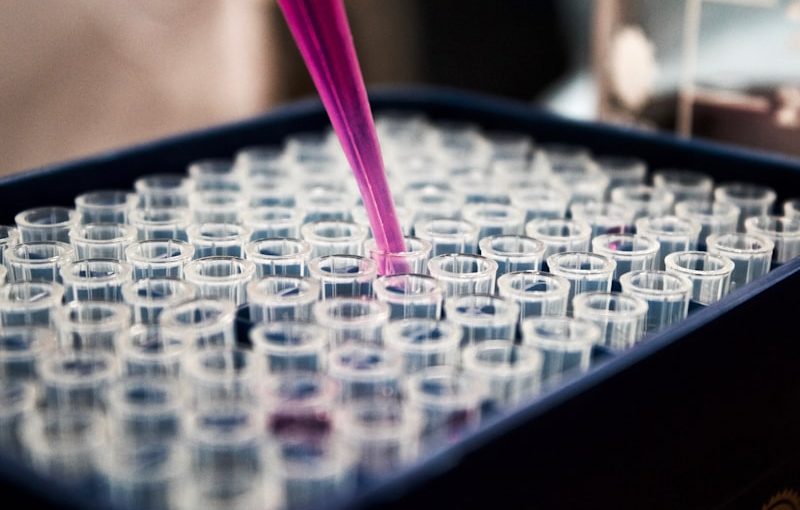
CCO Gold Score Thresholds, Award Rates, Pathway to IChO, and Value for Canadian University Applications

CCO (Canadian Chemistry Olympiad), organized by the Chemical Institute of Canada (CIC), is the highest-level high school chemistry competition in Canada and the core pathway for selecting the Canadian IChO national team. Its entry point is a CCC (Canadian Chemistry Contest) award invitation—students cannot register directly. Chinese students must first participate in CCC and win a Gold, Silver, Bronze, or Regional Merit Award before receiving a CCO invitation. Previous articles have covered CCO registration pathways, difficulty tiers, module weight distribution, and past paper patterns. This article focuses on the "results-oriented" questions that parents care about most: What score is needed for a CCO Gold? What are the award rates? How does the pathway from CCO to IChO work? How helpful is it for applications to Canadian universities (UofT/Waterloo/UBC/McGill)? As of July 2026, there are approximately 7 weeks until the 2026 CCO (September 19)—this is the final sprint window for CCC award winners. For those planning the 2027 pathway, the cycle of CCC (expected April 2027) → CCO (expected September 2027) → IChO selection must be planned in advance.

I. CCO Gold Score Thresholds: Percentage-Based Cutoffs + Sample Score Ranges (Dynamically Determined, Not Fixed)

1. Clarification First: CCO Awards Are Percentage-Based, with No Fixed Score Cutoff

CCO awards are officially determined by percentage: China region Super Gold top 5%, Gold top 10%, Silver top 20%, Bronze top 35%, and Regional Merit Award top 20% in each region (excluding national award winners). Global awards (Global Gold/Silver/Bronze/Merit) are determined by CIC based on the global score distribution each year. In other words, there is no fixed numerical threshold for a CCO Gold—it is dynamically determined after the exam based on the performance of all participants. If the exam is difficult, the cutoff is lower; if it is easier, the cutoff is higher.

2. Sample CCO Score Cutoffs (Out of 35 Points, Based on Recent Exam Reviews)

Year Super Gold Cutoff Gold Cutoff Silver Cutoff Bronze Cutoff
2022 (Sample) ≥20 ≥19 ≥16 ≥14
2023 (Sample) ≥22 ≥20 ≥16 ≥14
2024 (Sample) ≥23 ≥21 ≥16 ≥14
2025 (Sample) ≥23 ≥20 ≥16 ≥14

Note: The above is sample data based on exam reviews. CCO does not publish fixed absolute score cutoffs; they are dynamically determined each year based on participant performance. After the major 2025 syllabus overhaul, overall difficulty increased by approximately 20%, and competition in the high-score segment (Gold and above) continues to intensify.

Practical reference: Under the 35-point scale, a CCO Gold in the China region typically requires around 20 points (approximately 57% score rate), and a Super Gold requires around 23 points (approximately 66% score rate). However, this is only a sample reference; the actual Gold cutoff fluctuates with the difficulty of that year's exam and is subject to CIC's post-exam announcement.

3. Clarifying CCC Advancement Cutoffs (2026 Data)

Many families confuse CCC score cutoffs with CCO Gold cutoffs. The 2026 CCC (held April 22) award cutoffs are: Global Merit Award ~15 points, National Gold 20 points (top 10%), Silver 17 points (top 25%), Bronze 15 points (top 35%). Over the past three years, the CCC Gold cutoff has ranged between 18–21 points (21 in 2024, 18 in 2025, 20 in 2026). Achieving CCC National Silver or above (≥17 points) essentially secures a CCO invitation; those at the Bronze cutoff edge face uncertainty regarding the invitation. However, it is important to note—CCC cutoffs are the "ticket to CCO," not the "CCO Gold cutoff." The difficulty gap between the two is an order of magnitude apart.

II. CCO Award Rates: The "Explicit Award Rates" Under the Percentage System

Award China Region Percentage Cumulative Award Rate
Super Gold Top 5% 5%
Gold Top 10% 10%
Silver Top 20% 20%
Bronze Top 35% 35%
Regional Merit Award Top 20% per region (excluding national award winners) Varies by region

Note: The total CCO award rate in the China region is approximately 35% (Bronze and above). However, this is the "award rate among participants"—and CCO participants are already a filtered group of CCC award winners (approximately the top 35% nationally). Therefore, when extrapolating to the base of "all CCC candidates," CCO Gold winners account for only about 3.5% of all CCC candidates (35% × 10%), and Super Gold winners about 1.75%. The true scarcity of a CCO Gold—in the eyes of Canadian university admissions officers, it signals a "top 10% global chemistry elite" certification—is the real value of its prestige.

III. From CCO to IChO: The Canadian National Team Selection Pathway

1. Complete Pathway: CCC → CCO Training Program → National Camp → IChO National Team

CCO is the only official selection pathway for Canada's IChO national team. The pathway is:

  • Step 1: CCC award (national top 35%) → Receive CCO invitation;
  • Step 2: CCO Training Program (organized by CIC, with graduate student volunteers serving as instructors, multiple rounds of assessment) → Comprehensive evaluation and selection;
  • Step 3: National Camp (Top 10% of CCO aggregate score performers are invited; the 2027 camp is expected to be held in late June to early July 2027 at UBC Vancouver for 9 days of intensive training);
  • Step 4: Final selection of the Top 4 from the camp to form the Canadian IChO national team, representing Canada at the IChO (2026 hosted in Uzbekistan).

2. 2025 Canadian IChO Team Results (Award Data Reference)

At the 2025 IChO in Dubai, the Canadian team of 4 members won 2 Silver and 2 Bronze medals: Alison Wang (Western Canada High School) – Bronze, Haiyue Luo (Port Moody Secondary School) – Bronze, Jiabei Luo (Sir Winston Churchill High School) – Silver, Oscar Liu (St. George's School) – Silver. These 4 students were the final winners of the CCO Training Program → National Camp → national team selection pathway that year, representing the highest level of high school chemistry in Canada.

3. Realistic Feasibility for Chinese Students to Pursue CCO → IChO

An honest assessment: CCO is the selection pathway for the Canadian national team. The 4 spots on the final Canadian IChO team prioritize Canadian citizens/permanent residents studying in Canadian high schools. For Chinese students (holding Chinese passports, studying in China), even with a CCO Super Gold, the probability of entering the National Camp is low, and the chance of being selected for the final 4-person IChO team is extremely slim. Therefore, for Chinese students, the true value of CCO is not "making the IChO national team" but "the CCO award itself"—a Super Gold or Gold is a highly significant endorsement of chemistry ability when applying to Canadian universities. This value alone is already substantial; there is no need to bet on the IChO national team.

IV. The Value of CCO for Canadian University Applications: The "Ace Endorsement" for Canadian Undergraduate Chemistry/Engineering

1. Recognition Hierarchy: Canada > United States > United Kingdom

Application Direction CCO Award Value Presentation Suggestions
Canadian Top Universities (UofT/Waterloo/UBC/McGill) Chemistry/Engineering/Materials Extremely valuable—one of the "ace" credentials, may be directly linked to scholarships Clearly list in the "Awards/Honors" section of the application; for competitive programs like Waterloo CS/Engineering, a CCO Gold can significantly boost competitiveness
US Top Universities (MIT/Caltech/Harvard/Stanford) Chemistry/Biochem/Engineering Valuable, but weaker than the USNCO National advancement + IChO medal combination Use in essays as strong evidence of STEM academic depth; for US-focused applicants, consider CCO + USNCO as a dual strategy
UK Top Universities (Oxford/Cambridge NatSci) Tier 1 recognition, but less direct than UKChO Round 1 Gold For UK-focused applicants, prioritize UKChO; use CCO as additional academic endorsement

Note: CCC is hosted by Canada's authoritative national chemistry society and is a core credential for demonstrating subject ability. A Bronze award or above can significantly enhance competitiveness. A CCO award is one of the "ace" credentials for applying to STEM programs at Canada's top universities and may be directly linked to scholarship evaluations. This is CCO's greatest differentiated advantage over UKChO (UK-focused) and USNCO (US-focused)—its "targeted signal value" for Canadian universities is the highest.

2. The Actual Weight of Different CCO Awards in Applications

  • Super Gold (Top 5%): A "gateway" endorsement for top programs such as Waterloo/McGill Engineering and UofT Applied Science; may be linked to scholarship determinations;
  • Gold (Top 10%): A core for Chemistry and related Engineering programs at UofT/Waterloo/UBC/McGill; strong evidence of academic depth in application essays;
  • Silver (Top 20%): A significant for Canadian undergraduate STEM applications, particularly beneficial for Waterloo's traditionally competitive programs (CS/Engineering/Mathematics);
  • Bronze (Top 35%): A foundational academic endorsement for Canadian undergraduate STEM applications; Bronze or above can significantly boost competitiveness;
  • Regional Merit Award: Positive for Canadian undergraduate applications, but the signal value is weaker than national awards.

3. Key Recommendations for Application Presentation

  • ① Clearly list in the Awards/Honors section: In OUAC (Ontario), UBC/Waterloo/McGill application systems, fill CCO Gold/Super Gold in the "Competitions/Awards" section, including the year and award level;
  • ② Tell the "process" in essays, not just list the award: The experience of "self-studying university chemistry textbooks, timed practice on 5 long-answer questions with process-point derivations" during CCO preparation, rather than the isolated award itself, better demonstrates academic passion and self-directed learning ability—traits most valued by Canadian university admissions officers;
  • ③ Present CCC + CCO as a combination: The "double Gold" combination of CCC Gold (top 10%) + CCO Gold (top 10%) sends a stronger signal than a CCO Gold alone, showcasing a complete academic growth trajectory from "top-tier high school chemistry" to "university-level chemistry preparation."

V. Appendix: CCO Award Data Summary and Goal Setting

1. Key Data at a Glance

  • CCO China region award percentages: Super Gold top 5% / Gold top 10% / Silver top 20% / Bronze top 35%;
  • CCO Gold sample cutoffs (out of 35 points): 2022 ≥19, 2023 ≥20, 2024 ≥21, 2025 ≥20; 2026 expected to fluctuate around 20 points;
  • CCC advancement to CCO cutoffs (2026): Gold 20 points / Silver 17 points / Bronze 15 points / Global Merit Award ~15 points;
  • CCO participant award rates: Bronze and above ~35%, Gold ~10%, Super Gold ~5%;
  • Extrapolated to all CCC candidates: CCO Gold winners account for approximately 3.5% of all CCC candidates, Super Gold winners approximately 1.75%;
  • Canadian IChO national team: 4 members selected from the National Camp each year; 2025 Canadian team won 2 Silver and 2 Bronze medals;
  • CCO signal value for Canadian undergraduate programs: An "ace endorsement" for Waterloo/McGill Engineering and UofT STEM programs; may be directly linked to scholarships.

2. Preparation Milestones for Different Goals

  • Target CCO Bronze (Top 35%): Systematically complete core General Chemistry content; master basic calculations across the four modules;
  • Target CCO Silver (Top 20%): Build on General Chemistry with introductory Physical Chemistry/Organic Chemistry; timed practice on 5 long-answer questions;
  • Target CCO Gold (Top 10%): Systematically master core university chemistry content + develop the habit of writing step-by-step derivations in English + timed mock exams with past papers; physical chemistry calculation chains and organic multi-step synthesis must be solid;
  • Target CCO Super Gold (Top 5%): Mastery of core university chemistry content + modeling ability for interdisciplinary integrated questions (CO₂ capture/lithium-ion batteries/enzyme catalysis) + innovative argumentation expression;
  • Target IChO Canadian National Team: Only realistic for Canadian citizens/PRs studying in Canadian high schools; Chinese students are advised not to bet on this.

⚠ Important Reminders:

  • CCO does not publish fixed absolute score cutoffs; awards are percentage-based (Super Gold top 5% / Gold top 10% / Silver top 20% / Bronze top 35%) and are dynamically determined after the exam. The sample cutoffs in the table above are for positioning reference only;
  • After the 2025 syllabus overhaul, overall difficulty increased by approximately 20%, and competition in the high-score segment has intensified;
  • The probability of Chinese students being selected for the Canadian IChO national team is extremely low. The true value of a CCO award lies in its role as an "ace endorsement" for Canadian undergraduate applications, not in "making the IChO national team";
  • The 2026 CCC advancement cutoffs are Gold 20 / Silver 17 / Bronze 15 (out of 25 points), which cannot be directly compared to CCO Gold cutoffs (out of 35 points).

The essence of a CCO Gold is a "top 10% global chemistry elite" certification—under the 35-point scale, it typically requires around 20 points (approximately 57% score rate), and Super Gold requires around 23 points (approximately 66% score rate). However, these are sample references, not fixed thresholds; the actual cutoff fluctuates with the difficulty of that year's exam. The true prestige of CCO lies in its "percentage-based award rates": participants are already a filtered group of CCC national top 35% performers, and CCO Gold winners account for only about 3.5% of all CCC candidates, while Super Gold winners account for only about 1.75%. This "elite among the doubly filtered" signal is precisely the academic credential most valued by Canadian university admissions officers. For applications to Canadian universities (UofT/Waterloo/UBC/McGill), a CCO award is an "ace endorsement" for Chemistry/Engineering/Materials programs and may be directly linked to scholarship determinations—this is CCO's greatest differentiated advantage over UKChO (UK-focused) and USNCO (US-focused).

At this point in July 2026: For those who have already received a 2026 CCO invitation, the summer months of July–September are the final window to sprint for a CCO Gold. Focus on systematic breakthroughs across the four modules: "Physical Chemistry Calculation Chains (35%) + Organic Multi-Step Synthesis (30%) + Inorganic Crystal Field Theory (20%) + Analytical Error Analysis (15%)," targeting a score above 20 points (the Gold cutoff). For those planning for the 2027 CCO, start CCC award pursuit in the summer after G10, systematically study university chemistry textbooks during the G10–G11 school year, and take CCO in the second semester of G11 (September 2027)—this is the optimal pathway for early application to Waterloo/McGill Engineering in the Canadian undergraduate direction.

Final tiered recommendation: For families targeting Canadian undergraduate Chemistry/Engineering, the "double Gold" combination of CCO Gold + CCC Gold is a direct track to Waterloo/McGill early admission. For families applying to both US and UK as safeties, CCO is a low-cost "add-on" option for Canadian undergraduate backup (CCC only requires an AP Chem foundation, and the organic chemistry textbook Klein can be reused for UKChO/USNCO). Chinese students should not bet on the Canadian IChO national team—the value of a CCO award itself for Canadian undergraduate applications is already substantial; focusing energy on "pursuing a CCO Gold" rather than "pursuing IChO" is more pragmatic.

# Canadian Chemistry Olympiad Elite Training Camp

Hours 70 hours
Class Size 3–8 students
Delivery Zoom live interactive online classes
Language English & Bilingual (Chinese-English)
Learning Objective CCO award in the Canada region
Target Students Canadian grades 9–11
Learning Support Exclusive Hanlin Academy chemistry competition textbooks and materials provided
Pre-entry test: free subject level assessment after registration, scientifically evaluating competition foundation
Full Q&A service: dedicated teacher group答疑 during the course (one答疑 session every 4 regular classes)
Past paper practice for consolidation and improvement
Pre-exam mock tests

Course Syllabus

Module Session Topic Content Hours
Foundational Chemistry 1 Matter, energy and quantities; Electromagnetic wave 1. Law of conservation of mass 2. Atoms 3. Pure substance & mixture 4. Properties 5. Four fundamental interactions 6. Law of conservation of energy 7. Kinetic energy & heat 8. Potential energy 9. Coulomb's Law 10. Electrostatic force & potential 11. Electromagnetic wave & photon 2H
2 Atomic structure, nuclear chemistry & mole 1. Subatomic particles 2. Isotope 3. Element 4. Mole calculation 5. Nuclear decay 2H
3 Electronic structure, periodic table arrangement & magnetism 1. Bohr model 2. Quantum mechanical model 3. Electron orbital 4. Electron configuration 5. Periodic table arrangement 6. Magnetism 2H
4 Periodicity 1. Effective nuclear charge 2. Atomic radius 3. Ionic radius 4. Ionisation energy 5. Electron affinity 6. Electronegativity 2H
5 Chemical bond & properties 1. Metallic bond 2. Ionic bond 3. Covalent bond 2H
6 Covalent bond advanced 1. Valency 2. Coordinate bond 3. Formal charge 4. Calculating bond number 5. Exception of octet rule 6. Lewis structure of complex compound 2H
7 Molecular geometry, polarity & coordination 1. Electron domain 2. VSEPR theory 3. Electron domain geometry 4. Molecular geometry 5. Molecular polarity 2H
8 Hybridisation, bond theory & coordination 1. Hybridisation 2. Bond theory 3. Resonance 4. Conjugated system 5. Coordination compound 2H
9 Liquid, solution & intermolecular force 1. Liquid state 2. London dispersion force 3. Dipole-dipole force 4. Hydrogen bond 5. Ion-dipole interaction 6. Solution 7. Concentration 2H
10 Gas & kinetic molecular theory 1. Pressure 2. Ideal gas vs real gas 3. Ideal gas law 4. Kinetic molecular theory 5. Maxwell-Boltzmann distribution 6. Deviation from ideal gas 2H
Subtotal 20H
Physical Chemistry 11 Kinetics 1: rate law & collision theory 1. Factors affecting reaction rate 2. Average rate 3. Differential rate 4. Collision theory 5. Simple stoichiometry 6. Rate law 7. Determining rate law 2H
12 Kinetics 2: Reaction mechanism, integrated rate law & Arrhenius equation 1. Reaction mechanism 2. Pre-equilibrium assumption 3. Steady state approximation 4. Integrated rate law 5. Half-life 6. Determining rate law advanced 2H
13 Equilibrium & stoichiometry 1. Reversible reaction 2. Equilibrium 3. Equilibrium constant 4. Reaction quotient 5. Le Chatelier's Principle 6. Stoichiometry advanced 2H
14 Acid & base 1. Arrhenius acid/base 2. Brønsted-Lowry acid/base 3. Lewis acid/base 4. pH & pOH 5. Conjugate acid/base 6. Acid/base strength 7. Ka & Kb 2H
15 Equilibrium advanced 1. Polyprotic acid 2. Buffer 3. Strong acid/base titration 4. Weak acid/base titration 5. Ksp 6. Ionic reaction 2H
16 Enthalpy, entropy and Gibbs free energy 1. Spontaneity 2. Enthalpy 3. Determining ΔH 4. Entropy & probability 5. Determining ΔS 6. Gibbs free energy 7. Determining ΔG & spontaneity 2H
17 Electrochemistry 1. Redox reaction 2. Oxidation number 3. Electrode potential 4. Galvanic cell 5. Electrolytic cell 6. Electroplating 2H
Subtotal 14H
Organic Chemistry 18 Organic 1: Hydrocarbon & representation 1. Organic introduction 2. Hydrocarbon 3. Homologous series 4. Isomer introduction 5. Double bond equivalence (DBE) 6. Structure representation 2H
19 Organic 2: Functional group & reaction 1. Functional group with O, N, S 2. Addition 3. Elimination 4. Substitution 5. Rearrangement 6. Condensation & hydrolysis 7. Oxidation & reduction 2H
20 Organic 3: Isomerism & nomenclature 1. Constitutional Isomer 2. Stereoisomer 3. Conformer 4. IUPAC nomenclature 2H
Subtotal 6H

PART B

Module Session Topic Content Hours
Inorganic and Structural Chemistry 1 Coordination chemistry 1. Coordinate bond 2. Coordination compound 3. Geometrical isomers of square planar and octahedral transition metal complexes 2H
2 Molecular orbital theory 1. MO theory introduction 2. MO diagrams for diatomics 3. Metal-ligand interactions 2H
3 Inorganic analysis 1. Inorganic analysis 2. CCO inorganic questions 2H
Subtotal 6H
Organic Chemistry (Advanced) 4 Stereochemistry 1. Chirality & chiral centre 2. Enantiomer 3. Recognising isomer possibilities in molecules with multiple stereocentres 4. Diastereomer 5. Meso compound 6. Chirality of octahedral complex 2H
5 Reaction mechanism 1: Introduction & free radical mechanism 1. Organic reaction transformation 2. Common organic reaction & reagent 3. 4 types of mechanism 4. Free-radical mechanism 2H
6 Reaction mechanism 2: polar mechanism 1. Nucleophile & Electrophile 2. HSAB theory 3. SN1, SN2 reaction 4. E1, E2 reaction 5. Electrophilic addition 6. Nucleophilic addition 2H
7 Reaction mechanism 3: aromatic substitution 1. Aromaticity 2. EDG & EWG 3. Ortho/para vs meta directors 4. Synthesis involving benzene 2H
8 Advanced organic reaction 1. Enol, enolate, enal, enone 2. Enol-keto tautomerisation 3. Acyloin, aldol 4. Aldol reaction, Knoevenagel condensation 5. Transition metal catalysis 2H
9 Advanced synthesis 1. Extending carbon chain (Wittig reaction, Grignard reagent, epoxide ring opening) 2. Protection & Deprotection 3. Advanced redox (Wolff-Kishner Reduction, ozonolysis, epoxidation, hydroboration-oxidation) 4. Rearrangement (Claisen, 1,2-hydride shift) 5. Gabriel synthesis 2H
10 Analytics & spectroscopy 1. Molecular ions 2. Mass-to-charge ratio 3. Isotope distribution 4. DBE analysis 5. IR spectrum 2H
11 Carbohydrate chemistry 1. Represent chair conformations 2. Carbohydrate reactions 2H
12 Synthesis pathway 1. Organic recap 2. Logic of synthesis pathway 3. Solving synthetic problem 2H
Subtotal 18H
Physical Chemistry (Advanced) 13 Equilibria advanced 1. Revision: Equilibrium 2. Ksp & Kf 3. Connection between ΔG, K & Ecell 4. Temperature dependence of equilibrium constant 2H
14 Transition metal catalysis 1. Single electron transfer (SET) 2. Hydrogen atom transfer (HAT) 3. Cross-coupling reactions 2H
15 Photochemistry 1. Photocatalysis 2. Fluorescence and phosphorescence 3. Quantum yields 4. Quenching, lifetimes 5. Jablonski and Förster diagrams 2H
Subtotal 6H
Total 70H

Course structure and progress may be adjusted based on the actual situation of students, subject to the specific class arrangement.

CCO Past Paper Analysis: High-Frequency Topics, Organic Chemistry Patterns, Experimental Question Trends, with CCO Question Classification

CCO (Canadian Chemistry Olympiad), organized by the Chemical Institute of Canada (CIC), is an individual written exam, entirely in English, lasting 120 minutes, consisting of 5 short-answer/proof questions, with no laboratory component. Scoring is process-point dominated (Knowledge Depth 40% + Logical Rigor 30% + Calculation Accuracy 20% + Innovative Thinking 10%), and all calculated results must be reported to three significant figures. Previous articles have covered CCO registration pathways, difficulty tiers, module weight distribution, and syllabus. This article dives into past papers: based on the 2025 exam review and sampling of recent years' papers, it extracts high-frequency topic distribution, organic chemistry patterns, experimental design question trends, and provides an actionable question classification framework—distinct from previous articles. As of July 2026, there are approximately 11 weeks until the 2026 CCO (mid-October, specific date pending official announcement)—this is the window for CCC award winners to use past papers for targeted breakthroughs.

I. High-Frequency Topic Distribution in Past Papers (Based on 2025 Review + Recent Sampling)

1. Module Placement Patterns Across the 5 Questions

Based on a sampling of the 2025 CCO exam structure, the 5 questions show relatively stable module placement patterns: Physical Chemistry accounts for 1–1.5 questions (quantum chemistry/molecular orbital energy levels/spectral analysis, highest difficulty coefficient), Thermodynamics accounts for 0.5–1 question (ΔG for multi-component systems, phase equilibrium, temperature dependence of equilibrium constants), Kinetics + Equilibrium Integration accounts for 0.5–1 question (rate laws/Arrhenius/reaction mechanisms coupled with equilibrium shifts), Organic Chemistry accounts for a fixed 1 question (multi-step synthesis + mechanism arrows + stereochemical control), Inorganic + Analytical accounts for approximately 0.5–1 question (often appearing as experimental design questions).

2. High-Frequency Topic Checklist (by Frequency)

Module High-Frequency Topics (Sampled) Question Format
Physical Chemistry Quantum chemistry particle-in-a-box model, hydrogen atom wavefunction probability density, molecular orbital energy levels, Nernst equation in non-standard states, fuel cell design Derivation + calculation, 5–7 steps per question
Thermodynamics & Equilibrium ΔG for multi-component systems, Kirchhoff's law for multi-step reaction enthalpy changes, temperature dependence of equilibrium constants, coupled acid-base/precipitation/complexation/redox equilibria Calculation + derivation
Organic Chemistry Multi-step synthesis pathway design, SN1/SN2/E1/E2 competition, carbonyl nucleophilic addition, electrophilic aromatic substitution, stereochemistry R/S, NMR spectral analysis, biomolecular synthesis pathways Fixed 1 long-answer question, 3–5 steps of synthesis + mechanism arrows
Inorganic Chemistry Crystal field theory, CFSE, unit cell parameters and packing efficiency calculations, transition metal complex color and magnetism, coordination catalysis Calculation + explanation
Analytical Chemistry Polyprotic acid-base titration curves, spectrophotometric error analysis, extracting chemical information from real datasets (XRD/NMR) Calculation + experimental design
Interdisciplinary Integration CO₂ capture process design, lithium-ion battery cathode material stability, enzyme catalysis kinetics Open-ended design + optimization recommendations

Source: Compiled from past paper sampling. Note: The above is statistical sampling and may be adjusted slightly year to year with question design. Physical Chemistry + Organic Chemistry together account for approximately 60%–65%, making them the "main battlefield" of past papers. After the 2025 syllabus overhaul, advanced university content such as quantum chemistry, complex kinetics, and biomolecular synthesis pathway design were added, with overall theoretical depth increasing by about 20%.

II. Organic Chemistry Patterns: From "Reaction Memorization" to a Trinity of "Mechanisms + Synthesis + Stereochemistry"

1. Fixed 1 Long-Answer Question, Accounting for ~30%, the Highest Discriminatory Module

CCO organic chemistry consistently occupies 1 long-answer question, worth approximately 30%, making it the "watershed" that determines whether one can achieve Gold. After the 2025 syllabus overhaul, organic chemistry assessment has been fully upgraded from traditional "reaction memorization" to a comprehensive evaluation of "complex mechanism inference + precise stereochemical analysis + cutting-edge biomolecular synthesis pathway design."

2. Five High-Frequency Topics and Question Formats

High-Frequency Topic Typical Question Format Core Difficulty
Multi-step Synthesis Pathway Design Given starting materials + target product, design a 3–5 step synthesis, write reagents/conditions/mechanism arrows for each step Retrosynthetic analysis thinking; nucleophile/electrophile selection under acid-base control
Reaction Mechanism Inference SN1/SN2/E1/E2 competition, carbonyl nucleophilic addition, electrophilic aromatic substitution, Diels-Alder Standard electron arrow notation; subtle differences in reaction conditions (strong base/weak base, protic/aprotic solvent)
Comprehensive Stereochemical Analysis Determine number of chiral centers + R/S configuration; predict ¹H NMR splitting; analyze stereoselectivity SN2 inversion, E2 anti-coplanar, Diels-Alder endo/exo selectivity
NMR Spectral Analysis Given ¹H NMR/¹³C NMR spectra, deduce organic structure Combined inference from chemical shift/integration/splitting patterns; frequency of examination has been rising in recent years
Biomolecular Synthesis Pathway Design (New in 2025) Combine organic reaction mechanisms with biochemistry knowledge to design polymer/biomolecular synthesis pathways Integration of organic + biochemistry knowledge; enzyme catalysis mechanisms

Source: Compiled from past paper sampling. Note: In the 2024 exam, the organic question "did not immediately test total synthesis; it was already a very gentle approach—inference questions are routine题型 for competition students." Judgment of reaction conditions (nucleophile/electrophile selection under acid-base control) is the core paradigm, and bond-forming/bond-breaking analysis is the universal methodology—even without prior knowledge of a specific named reaction (such as Gabriel primary amine synthesis), using the bond-forming/bond-breaking methodology can still earn the majority of the process points. This pattern is highly instructive for preparation: CCO organic questions test "methodology" rather than "reaction memorization."

3. Three Common Patterns in Organic Questions

  • ① Block diagram synthesis questions appear frequently, but after 2025, requirements for predicting the number of chiral centers and NMR spectral analysis have been added;
  • ② Stereochemistry is a major point-loss area; neglecting SN2 inversion, E2 anti-coplanar, and Diels-Alder endo/exo selectivity are common reasons for losing points;
  • ③ Named reactions are tested but not by rote memorization: the mechanisms and stereochemical outcomes of Grignard, Diels-Alder, SN1/SN2 must be understood rather than just memorizing conclusions.

III. Experimental Question Trends: No Lab Work, but "Experimental Design + Data Analysis" Weight Is Increasing

1. Clarification First: CCO Is Entirely a Written Exam, No Lab Work

Unlike USNCO National Part III (which includes actual burette + analytical balance), CCO has no lab work component. The so-called "experimental questions" are short-answer questions that test "experimental design thinking + real data analysis." Recent trends show that the weight of experimental design questions has increased significantly, covering titration scheme optimization, instrument calibration error analysis, unknown substance identification process design, etc.—this is the weakest area where Chinese students lose the most points.

2. Three Major Trends (Based on 2025 Exam Review)

Trend Specific Manifestation Past Paper Sampling
Calculation + Experimental Design Mixed Questions Infer unknown acid concentration from titration curve, and design a verification experiment (with safety operation standards noted) 2025 innovative question type
Real Dataset Analysis Introduce real lab data such as NMR spectra, X-ray diffraction patterns, requiring curve fitting and error analysis 2025 analytical chemistry question innovation
Interdisciplinary Open-Ended Design Design a stoichiometric model for CO₂ capture process, optimize amine-based absorbent regeneration energy consumption; compare catalyst cost and efficiency 2025 interdisciplinary integration question

Source: Compiled from past paper sampling. Note: The trends show three characteristics—calculation-intensive, data-driven, and open-ended questioning—with some questions extending beyond traditional chemistry competition boundaries toward research practice. High-frequency point-loss areas in experimental design questions: unit conversion errors (mixing kJ with J, kPa with Pa, causing over 30% of candidates to lose points each year), improper significant figures, errors in stereochemical R/S labeling and Fischer projection conversion, and missing key steps in derivations (which may result in a 50% deduction in step-by-step points).

3. Response Template for Experimental Design Questions

For "given scenario → design experiment" type questions, establish a seven-part template: "Purpose → Hypothesis → Variable Control → Equipment Selection → Procedure → Data Collection → Error Analysis." For "given data → reverse-engineer mechanism" type questions, establish a four-part template: "Data Feature Identification → Possible Mechanism Hypothesis → Formula Application → Result Verification." CCO scoring emphasizes a four-part structure of "Conclusion – Principle – Derivation – Verification"; omitting key assumptions may result in a 50% deduction in step-by-step points.

IV. Appendix: CCO Question Classification Framework (For Preparation Use)

1. Classification by Knowledge Module (Categorization Dimension for Past Paper Practice)

  • ① Physical Chemistry Calculation: Quantum chemistry particle-in-a-box, molecular orbital energy levels, Nernst equation in non-standard states, Arrhenius activation energy derivation, ΔG for multi-component systems;
  • ② Thermodynamics & Equilibrium: Kirchhoff's multi-step enthalpy change, temperature dependence of equilibrium constants, coupled acid-base/precipitation/complexation/redox equilibria;
  • ③ Organic Synthesis & Mechanisms: 3–5 step synthesis design, SN1/SN2/E1/E2, carbonyl nucleophilic addition, electrophilic aromatic substitution, Diels-Alder, stereochemistry R/S, NMR analysis, biosynthetic pathways;
  • ④ Inorganic Structure: Unit cell parameters and packing efficiency, crystal field CFSE, complex color and magnetism, coordination catalysis;
  • ⑤ Analytical Chemistry: Polyprotic acid-base titration curves, spectrophotometric error, real dataset (XRD/NMR) analysis;
  • ⑥ Experimental Design: Titration scheme optimization, instrument calibration error, unknown substance identification process;
  • ⑦ Interdisciplinary Integration: CO₂ capture, lithium-ion batteries, enzyme catalysis kinetics.

2. Classification by Difficulty Level

  • Level 1 (Solvable with AP/IB/A-Level foundation): Basic thermodynamic calculations, simple equilibrium constants, basic organic reaction recognition;
  • Level 2 (Requires university chemistry textbook supplementation): Quantum chemistry particle-in-a-box, complex kinetics steady-state approximation, crystal field theory, multi-step organic synthesis;
  • Level 3 (CCO discriminatory questions): Cross-module integration (thermodynamics + kinetics coupling, organic + biochemistry fusion), open-ended experimental design questions, real dataset analysis.

During preparation, practice in the order of "Level 1 → 2 → 3." In timed training, prioritize accuracy on Level 1 + 2 questions, and aim for process points on Level 3 questions.

3. Three Key Actions for Past Paper Practice

  • ① Timed 120-minute full sets: Train time allocation across the 5 questions (approximately 24 minutes per question + 10 minutes for review) to adapt to CCO's rhythm pressure;
  • ② Process-point oriented grading: Self-check against scoring standards—even if the final answer is wrong, as long as the derivation logic is correct and steps are complete, most of the points can still be earned; conversely, a correct isolated number may receive few points due to lack of process;
  • ③ Maintain an error log categorized by module: Focus on recording four types of high-frequency point-loss items: "unit conversion errors, improper significant figures, stereochemical misjudgment, unstated formula applicability conditions."

⚠ Important Reminders:

  • The high-frequency topics in the table above are statistical samplings based on the 2025 exam review and recent years' papers; they may be adjusted slightly year to year with question design—always refer to the official announcements for the current year;
  • CCO has no laboratory operation component; "experimental questions" refer to experimental design and data analysis in short-answer questions;
  • After the 2025 syllabus overhaul, difficulty increased by about 20%, with quantum chemistry, complex kinetics, and biosynthetic pathways as new focal points;
  • Scoring is process-point dominated; omitting key assumptions may result in a 50% deduction in step-by-step points; calculated results must be reported to three significant figures;
  • Source: Based on publicly available exam reviews and preparation materials.

The core patterns of CCO past papers can be distilled into three sentences: Physical Chemistry + Organic Chemistry is the main battlefield (together accounting for 60%–65%), Organic Chemistry occupies a fixed 1 long-answer question with the highest discriminatory power, and Experimental Design has no lab work but its weight is increasing. The logic of organic chemistry questions has shifted from "reaction memorization" to "nucleophile/electrophile processes under acid-base control + bond-forming/bond-breaking analysis methodology"—even without having studied a specific named reaction, using the bond-forming/bond-breaking methodology can still earn most of the process points, which aligns perfectly with CCO's "process-point dominated" scoring culture. The trends in experimental questions are calculation-intensive, data-driven, and open-ended; the "calculation + experimental design mixed questions" and "real dataset analysis questions" that appeared in 2025 have become the new normal.

At this point in July 2026: CCC award winners who have received a 2026 CCO invitation should, during the summer from July to October, follow the four-step approach of "module-based past paper practice → timed full-set training → process-point oriented grading → error log categorization," focusing on breaking through the three hard university-alignment thresholds of physical chemistry calculation chains, organic multi-step synthesis, and experimental design templates. If planning for the 2027 CCO, start systematic study of university chemistry textbooks now, and after winning a CCC award in 2027, enter past paper sprint mode.

A final word to preparers: The value of CCO past papers lies not in "getting the right answer," but in "grading with a process-point logic"—a correct isolated number may earn only 1 point, while a complete derivation with a wrong final answer can earn 4–5 points. This is the most fundamental scoring culture difference between CCO and AP/IB/A-Level, and the instinct that must be deliberately trained when practicing past papers.

# Canadian Chemistry Olympiad Elite Training Camp

Hours 70 hours
Class Size 3–8 students
Delivery Zoom live interactive online classes
Language English & Bilingual (Chinese-English)
Learning Objective CCO award in the Canada region
Target Students Canadian grades 9–11
Learning Support Exclusive Hanlin Academy chemistry competition textbooks and materials provided
Pre-entry test: free subject level assessment after registration, scientifically evaluating competition foundation
Full Q&A service: dedicated teacher group答疑 during the course (one答疑 session every 4 regular classes)
Past paper practice for consolidation and improvement
Pre-exam mock tests

Course Syllabus

Module Session Topic Content Hours
Foundational Chemistry 1 Matter, energy and quantities; Electromagnetic wave 1. Law of conservation of mass 2. Atoms 3. Pure substance & mixture 4. Properties 5. Four fundamental interactions 6. Law of conservation of energy 7. Kinetic energy & heat 8. Potential energy 9. Coulomb's Law 10. Electrostatic force & potential 11. Electromagnetic wave & photon 2H
2 Atomic structure, nuclear chemistry & mole 1. Subatomic particles 2. Isotope 3. Element 4. Mole calculation 5. Nuclear decay 2H
3 Electronic structure, periodic table arrangement & magnetism 1. Bohr model 2. Quantum mechanical model 3. Electron orbital 4. Electron configuration 5. Periodic table arrangement 6. Magnetism 2H
4 Periodicity 1. Effective nuclear charge 2. Atomic radius 3. Ionic radius 4. Ionisation energy 5. Electron affinity 6. Electronegativity 2H
5 Chemical bond & properties 1. Metallic bond 2. Ionic bond 3. Covalent bond 2H
6 Covalent bond advanced 1. Valency 2. Coordinate bond 3. Formal charge 4. Calculating bond number 5. Exception of octet rule 6. Lewis structure of complex compound 2H
7 Molecular geometry, polarity & coordination 1. Electron domain 2. VSEPR theory 3. Electron domain geometry 4. Molecular geometry 5. Molecular polarity 2H
8 Hybridisation, bond theory & coordination 1. Hybridisation 2. Bond theory 3. Resonance 4. Conjugated system 5. Coordination compound 2H
9 Liquid, solution & intermolecular force 1. Liquid state 2. London dispersion force 3. Dipole-dipole force 4. Hydrogen bond 5. Ion-dipole interaction 6. Solution 7. Concentration 2H
10 Gas & kinetic molecular theory 1. Pressure 2. Ideal gas vs real gas 3. Ideal gas law 4. Kinetic molecular theory 5. Maxwell-Boltzmann distribution 6. Deviation from ideal gas 2H
Subtotal 20H
Physical Chemistry 11 Kinetics 1: rate law & collision theory 1. Factors affecting reaction rate 2. Average rate 3. Differential rate 4. Collision theory 5. Simple stoichiometry 6. Rate law 7. Determining rate law 2H
12 Kinetics 2: Reaction mechanism, integrated rate law & Arrhenius equation 1. Reaction mechanism 2. Pre-equilibrium assumption 3. Steady state approximation 4. Integrated rate law 5. Half-life 6. Determining rate law advanced 2H
13 Equilibrium & stoichiometry 1. Reversible reaction 2. Equilibrium 3. Equilibrium constant 4. Reaction quotient 5. Le Chatelier's Principle 6. Stoichiometry advanced 2H
14 Acid & base 1. Arrhenius acid/base 2. Brønsted-Lowry acid/base 3. Lewis acid/base 4. pH & pOH 5. Conjugate acid/base 6. Acid/base strength 7. Ka & Kb 2H
15 Equilibrium advanced 1. Polyprotic acid 2. Buffer 3. Strong acid/base titration 4. Weak acid/base titration 5. Ksp 6. Ionic reaction 2H
16 Enthalpy, entropy and Gibbs free energy 1. Spontaneity 2. Enthalpy 3. Determining ΔH 4. Entropy & probability 5. Determining ΔS 6. Gibbs free energy 7. Determining ΔG & spontaneity 2H
17 Electrochemistry 1. Redox reaction 2. Oxidation number 3. Electrode potential 4. Galvanic cell 5. Electrolytic cell 6. Electroplating 2H
Subtotal 14H
Organic Chemistry 18 Organic 1: Hydrocarbon & representation 1. Organic introduction 2. Hydrocarbon 3. Homologous series 4. Isomer introduction 5. Double bond equivalence (DBE) 6. Structure representation 2H
19 Organic 2: Functional group & reaction 1. Functional group with O, N, S 2. Addition 3. Elimination 4. Substitution 5. Rearrangement 6. Condensation & hydrolysis 7. Oxidation & reduction 2H
20 Organic 3: Isomerism & nomenclature 1. Constitutional Isomer 2. Stereoisomer 3. Conformer 4. IUPAC nomenclature 2H
Subtotal 6H

PART B

Module Session Topic Content Hours
Inorganic and Structural Chemistry 1 Coordination chemistry 1. Coordinate bond 2. Coordination compound 3. Geometrical isomers of square planar and octahedral transition metal complexes 2H
2 Molecular orbital theory 1. MO theory introduction 2. MO diagrams for diatomics 3. Metal-ligand interactions 2H
3 Inorganic analysis 1. Inorganic analysis 2. CCO inorganic questions 2H
Subtotal 6H
Organic Chemistry (Advanced) 4 Stereochemistry 1. Chirality & chiral centre 2. Enantiomer 3. Recognising isomer possibilities in molecules with multiple stereocentres 4. Diastereomer 5. Meso compound 6. Chirality of octahedral complex 2H
5 Reaction mechanism 1: Introduction & free radical mechanism 1. Organic reaction transformation 2. Common organic reaction & reagent 3. 4 types of mechanism 4. Free-radical mechanism 2H
6 Reaction mechanism 2: polar mechanism 1. Nucleophile & Electrophile 2. HSAB theory 3. SN1, SN2 reaction 4. E1, E2 reaction 5. Electrophilic addition 6. Nucleophilic addition 2H
7 Reaction mechanism 3: aromatic substitution 1. Aromaticity 2. EDG & EWG 3. Ortho/para vs meta directors 4. Synthesis involving benzene 2H
8 Advanced organic reaction 1. Enol, enolate, enal, enone 2. Enol-keto tautomerisation 3. Acyloin, aldol 4. Aldol reaction, Knoevenagel condensation 5. Transition metal catalysis 2H
9 Advanced synthesis 1. Extending carbon chain (Wittig reaction, Grignard reagent, epoxide ring opening) 2. Protection & Deprotection 3. Advanced redox (Wolff-Kishner Reduction, ozonolysis, epoxidation, hydroboration-oxidation) 4. Rearrangement (Claisen, 1,2-hydride shift) 5. Gabriel synthesis 2H
10 Analytics & spectroscopy 1. Molecular ions 2. Mass-to-charge ratio 3. Isotope distribution 4. DBE analysis 5. IR spectrum 2H
11 Carbohydrate chemistry 1. Represent chair conformations 2. Carbohydrate reactions 2H
12 Synthesis pathway 1. Organic recap 2. Logic of synthesis pathway 3. Solving synthetic problem 2H
Subtotal 18H
Physical Chemistry (Advanced) 13 Equilibria advanced 1. Revision: Equilibrium 2. Ksp & Kf 3. Connection between ΔG, K & Ecell 4. Temperature dependence of equilibrium constant 2H
14 Transition metal catalysis 1. Single electron transfer (SET) 2. Hydrogen atom transfer (HAT) 3. Cross-coupling reactions 2H
15 Photochemistry 1. Photocatalysis 2. Fluorescence and phosphorescence 3. Quantum yields 4. Quenching, lifetimes 5. Jablonski and Förster diagrams 2H
Subtotal 6H
Total 70H

Course structure and progress may be adjusted based on the actual situation of students, subject to the specific class arrangement.

Online Customer Service
Contact Customer Service