Winning a medal at the Canadian Chemistry Contest (CCC) is a dream shared by thousands of ambitious high school students across Canada and around the world. But here is the truth that most preparation guides will not tell you: CCC success is not about raw talent or last-minute cramming — it is about having a structured, strategic, and consistently executed study plan. The students who earn gold, silver, and bronze medals are not necessarily the ones with the highest IQs; they are the ones who started early, prepared smart, and stayed disciplined.
Whether you are starting from scratch or already have a solid foundation in chemistry, this article provides you with a complete 6-month study roadmap that has been refined by past CCC medalists and experienced chemistry coaches. By following this plan, you will build the knowledge, skills, and test-taking confidence needed to not only pass the CCC but to excel and earn a prestigious medal that will strengthen your university applications for years to come.
I. Understanding the Challenge: What Makes the CCC Difficult?
Before you can prepare effectively, you need to understand exactly what you are up against. The CCC is not just another chemistry test — it is a nationally standardized competition designed to identify the top young chemists in Canada. Here is what makes it uniquely challenging:
Time Pressure: 25 questions in 60 minutes means an average of only 2.4 minutes per question. Some questions require multi-step calculations that would take 5+ minutes if done slowly.
Five-Option Multiple Choice: Unlike typical 4-option tests, the CCC uses 5 options (A through E), making random guessing less effective and requiring deeper elimination skills.
Broad Topic Coverage: The exam spans the full Grade 11 and Grade 12 chemistry curriculum, from atomic structure to organic chemistry. You cannot afford to have any major weak areas.
Conceptual Traps: Many questions are designed to test whether you truly understand the concept or are just applying formulas mechanically. Superficial knowledge will not suffice.
Competition-Level Thinking: Some questions require creative problem-solving approaches that go beyond standard textbook methods.
The good news? All of these challenges can be systematically addressed with the right preparation approach. That is exactly what this 6-month plan is designed to do.
II. The 6-Month Roadmap: Overview
The preparation timeline is divided into four distinct phases, each building upon the previous one. This phased approach ensures that you develop deep understanding before moving to advanced problem-solving, and that peak performance coincides with exam day.

| Phase | Timeline | Focus | Weekly Hours |
|---|---|---|---|
| Phase 1: Foundation | Months 1-2 | Master core concepts and fill knowledge gaps | 6-8 hours |
| Phase 2: Deepening | Months 3-4 | Advanced topics and first past papers | 8-10 hours |
| Phase 3: Practice | Month 5 | Intensive past paper practice under timed conditions | 10-12 hours |
| Phase 4: Peak | Month 6 (Final) | Mock exams, weak area repair, and exam strategy | 8-10 hours |
Let us break down each phase in detail.
III. Phase 1 (Months 1-2): Building the Foundation
The first two months are all about building a rock-solid foundation. Do not rush into past papers or advanced problems yet — this phase is about ensuring you truly understand every core concept at a deep level.
Week 1-2: Atomic Structure, Periodic Table, and Chemical Bonding
Start with the fundamentals that underpin everything else in chemistry. Master electron configurations, periodic trends (electronegativity, ionization energy, atomic radius, electron affinity), and the three types of chemical bonding (ionic, covalent, metallic). Understand VSEPR theory and molecular geometry thoroughly — these topics appear in nearly every CCC exam.
Week 3-4: Stoichiometry and Solutions
Stoichiometry is the backbone of chemistry calculations. Practice mole conversions, limiting reactant problems, percent yield calculations, and solution chemistry (molarity, dilutions, solubility rules). Aim to solve at least 30-40 stoichiometry problems during these two weeks until the process becomes second nature.
Week 5-6: Gases and Thermodynamics
Master the Ideal Gas Law (PV = nRT), combined gas laws, Dalton’s Law of partial pressures, and Kinetic Molecular Theory. Then move to thermodynamics: enthalpy changes, Hess’s Law, and calorimetry calculations (q = mcΔT). Draw potential energy diagrams and practice interpreting them.
Week 7-8: Chemical Equilibrium and Kinetics
This is where many students struggle, so spend extra time here. Understand Le Chatelier’s Principle deeply — not just memorize the rules, but understand why the equilibrium shifts. Master equilibrium constant expressions (Kc, Kp), and learn the relationship between kinetics and equilibrium. For kinetics, understand collision theory, activation energy, rate laws, and the effect of catalysts.
Phase 1 Milestone Check: By the end of Month 2, you should be able to confidently solve any standard textbook problem from the topics above without looking at your notes. If you cannot, go back and review — do not move forward with gaps.
IV. Phase 2 (Months 3-4): Deepening Knowledge and First Past Papers
With a solid foundation in place, Phase 2 is where you tackle the remaining topics and begin your first encounters with actual CCC past papers.
Week 9-10: Acid-Base Chemistry
Acid-base chemistry is heavily tested on the CCC. Master Brønsted-Lowry theory, pH and pOH calculations, Ka and Kb relationships, buffer systems, and titration curves. Practice identifying equivalence points and understanding indicator selection. This topic often appears in the more challenging questions, so thorough preparation is essential.
Week 11-12: Electrochemistry and Redox
Learn to assign oxidation numbers quickly and accurately, balance redox reactions in both acidic and basic solutions, and understand galvanic and electrolytic cells. Practice calculating standard cell potentials using reduction potential tables. The CCC loves to test whether students can distinguish between anode and cathode reactions.
Week 13-14: Organic Chemistry
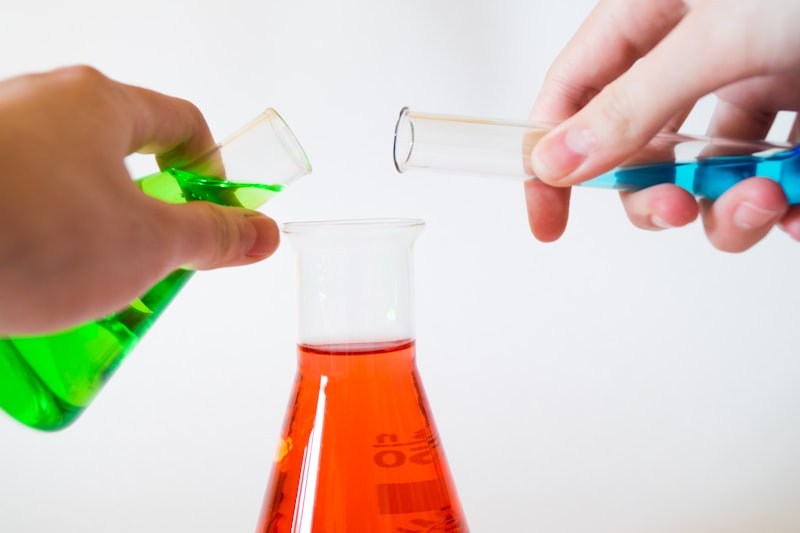
Do not skip organic chemistry! Many students neglect it, but it represents “free marks” for those who know the rules. Master IUPAC nomenclature for all major functional groups (alkanes, alkenes, alkynes, alcohols, carboxylic acids, esters, amines, ketones, aldehydes). Understand structural, geometric (cis/trans), and optical isomerism. Learn the key organic reactions: combustion, substitution, addition, elimination, esterification, and polymerization.
Week 15-16: First Past Papers
Now it is time for your first encounter with real CCC exams. Attempt 2-3 past papers, but do not worry about timing yet — focus on understanding the question style and identifying your weak areas. After each paper, carefully review every question you got wrong and understand why you got it wrong. Create a “mistake journal” where you record each error and the concept behind it.
Phase 2 Pro Tip: Start a “formula sheet” during this phase. Write down every formula, constant, and concept you need to memorize on a single page. Review this sheet every morning for the rest of your preparation.
V. Phase 3 (Month 5): Intensive Past Paper Practice
This is the most critical month of your preparation. Past paper practice under timed conditions is the single most effective way to improve your CCC score. Here is how to structure this phase:
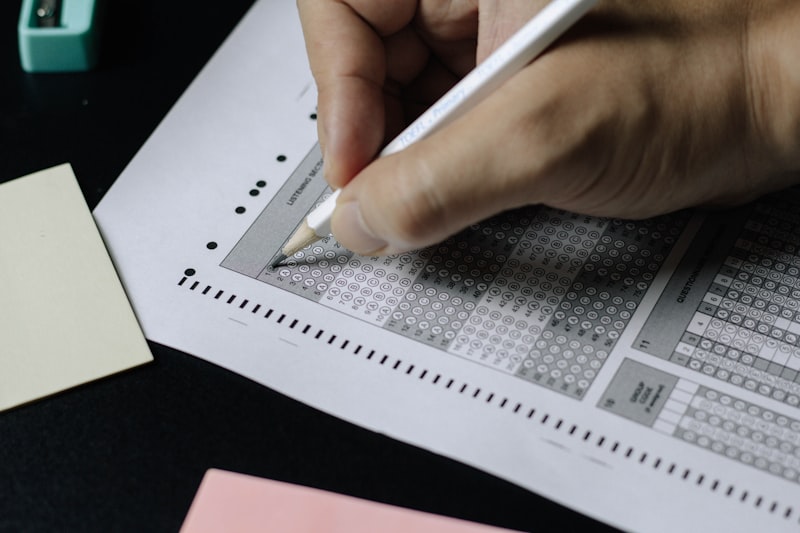
The Past Paper Protocol
Simulate Real Conditions: Set a timer for exactly 60 minutes. Put away all notes. Use only a non-programmable calculator. Sit at a desk with no distractions. This builds the mental stamina you need for exam day.
Complete the Full Paper: Do not stop early. Push through all 25 questions even if you are struggling. This trains your endurance and teaches you to manage time pressure.
Grade and Analyze: After completing the paper, grade it immediately. For every question you got wrong, write down: (a) what concept was being tested, (b) why you got it wrong, and (c) what you need to review.
Review and Repair: Spend 1-2 hours after each paper reviewing the weak areas you identified. Go back to your textbook, watch video explanations, or work through similar problems.
Track Your Progress: Keep a spreadsheet of your scores across all past papers. You should see a clear upward trend. If your scores plateau, it means you have a persistent weak area that needs targeted attention.
Aim to complete at least 8-10 past papers during this month, which means roughly 2-3 papers per week. By the end of Phase 3, you should be consistently scoring in the top 20% of all test-takers.
Phase 3 Milestone Check: Your last 3 past paper scores should be above 70% correct. If you are consistently below 60%, you need to go back and review foundational concepts before continuing.
VI. Phase 4 (Month 6): Peak Performance and Exam Strategy
The final month is about fine-tuning your performance and developing exam-day strategy. You already have the knowledge — now it is about maximizing your score on the day.
Week 21-22: Targeted Weak Area Repair
Review your mistake journal and past paper analysis. Identify the 2-3 topics where you lose the most marks. Dedicate focused study sessions to these weak areas. For example, if you consistently miss organic chemistry questions, spend an entire weekend on IUPAC nomenclature and reaction mechanisms.
Week 23-24: Mock Exams and Time Strategy
Take 2-3 full mock exams under strict exam conditions. During these mocks, practice your time allocation strategy:
First Pass (35-40 minutes): Go through all 25 questions. Answer every question you can solve immediately. Flag questions that need more time.
Second Pass (15-20 minutes): Return to flagged questions. These are the ones you know how to solve but need more time for calculations.
Final Minutes (5 minutes): Review any remaining flagged questions. Make educated guesses for any you cannot solve — there is typically no penalty for wrong answers.
Week 25-26: Final Review and Mental Preparation
In the final two weeks, shift your focus from learning new material to consolidating what you know. Review your formula sheet daily. Re-read your mistake journal. Do 1-2 lighter practice papers to stay sharp, but do not over-study. Get adequate sleep, eat well, and approach exam day with confidence.
Exam Day Tip: Arrive early, bring extra pencils and a backup calculator, and take 2 minutes before the exam starts to do a “brain dump” — write down all the formulas and constants you need to remember on the scrap paper. This reduces cognitive load during the exam.
VII. The 7 Most Common Mistakes CCC Students Make (And How to Avoid Them)
Through years of coaching CCC participants, certain mistakes appear again and again. Avoid these pitfalls and you will immediately put yourself ahead of the competition:
| # | Common Mistake | How to Avoid |
|---|---|---|
| 1 | Starting preparation too late (less than 3 months before exam) | Follow this 6-month plan — start now |
| 2 | Only reading textbooks without practicing problems | Solve at least 5 problems for every topic you study |
| 3 | Neglecting organic chemistry | Dedicate at least 2 full weeks to organic chem in Phase 2 |
| 4 | Not practicing under timed conditions | Every past paper should be done with a 60-min timer |
| 5 | Skipping the review of wrong answers | Maintain a mistake journal and review it weekly |
| 6 | Memorizing formulas without understanding concepts | For every formula, ask yourself WHY it works |
| 7 | Panicking during the exam and losing time management | Practice the 3-pass strategy during mock exams |
VIII. Recommended Resources for CCC Preparation
The right study materials can make a significant difference in your preparation efficiency. Here are the most highly recommended resources:
Textbooks
Nelson Chemistry 11 (SCH3U) — The gold standard for foundational chemistry concepts
Nelson Chemistry 12 (SCH4U) — Essential for advanced topics like equilibrium, electrochemistry, and organic chemistry
Zumdahl’s Chemistry — Excellent for deeper explanations and additional practice problems
Cracking the AP Chemistry Exam (Princeton Review) — Useful for quick review and practice questions
Online Resources
Chemistry Olympiad Canada (chemistryolympiad.ca) — Official source for past CCC papers and contest information
Khan Academy — Free video lessons on all AP/CCC-level chemistry topics
Art of Problem Solving (AoPS) Forums — Community discussions and shared past CCC problems
YouTube Chemistry Channels (Organic Chemistry Tutor, Professor Dave Explains) — Visual explanations of complex topics
Practice Materials
Past CCC Papers — The single most valuable resource; aim for at least 10 papers
IChO Past Preparatory Problems — For advanced students aiming for gold and CCO qualification
University of Waterloo Chemistry Contest Papers — Excellent supplementary practice
IX. The Long-Term Payoff: Why This Investment Is Worth It
Six months of dedicated preparation is a significant investment of time and effort. But consider the returns:
University Admissions Edge: A CCC medal distinguishes your application at every top university in Canada (Toronto, UBC, McGill, Waterloo), the US (Ivy League, MIT, Stanford), and the UK (Oxford, Cambridge, Imperial).
Scholarship Opportunities: Many universities offer special scholarships and bursaries for science olympiad medalists.
CCO and IChO Pathway: Strong CCC performance opens the door to the Canadian Chemistry Olympiad and potentially the International Chemistry Olympiad — among the most prestigious academic achievements a high school student can earn.
Deep Chemistry Understanding: The knowledge you build during preparation will serve you throughout university and your career, whether in medicine, engineering, research, or any science-related field.
Confidence and Discipline: The study habits and problem-solving skills you develop will transfer to every other academic challenge you face.
X. Final Words: Your Journey Starts Today
The difference between a student who earns a CCC medal and one who does not is rarely innate ability. It is almost always preparation. The 6-month plan outlined in this article has been proven effective by countless past medalists. It is not the fastest or easiest path — it is the reliable path.
Do not wait for the “perfect time” to start. The perfect time is now. Open your textbook, pick a topic from Phase 1, and solve your first practice problem today. Six months from now, when you walk into the CCC exam hall with confidence and competence, you will thank your present self for starting this journey.
“The expert in anything was once a beginner.” — Helen Hayes